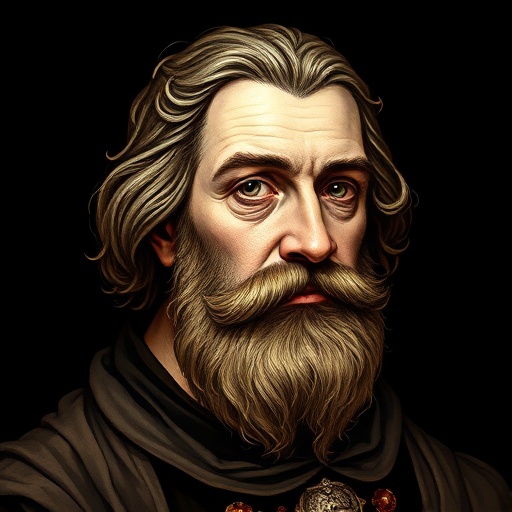
Geoffrey Chaucer — "A Monk ther was, a fair for the maistrie, An outridere, that loved venerie."
A Monk ther was, a fair for the maistrie, An outridere, that loved venerie.
A Monk ther was, a fair for the maistrie, An outridere, that loved venerie.
Click any product to generate a realistic preview. Up to 3 at a time.
* Initial load can take up to 90 seconds — revising the preview in another color is nearly instant.
"He was a maister of his craft, I dar wel seye."
"And Frenssh she spak ful faire and fetisly, After the scole of Stratford atte Bowe, For Frenssh of Parys was to hir unknowe."
"Upon the cop right of his nose he hade A werte, and theron stood a tuft of heres rede, As bristles of a sowes eerys olde."
"Therfore, for to speke of the horrible sweryng of the Sowdan, and of the horrible cursedness of his lyf, I holde it nat pertinent to my tale."
"And evere he rood the hyndreste of oure route."
English poet, civil servant, and the father of English literature; The Canterbury Tales (~1387-1400) is the founding text of English-language storytelling. Closely associated with Giovanni Boccaccio (his Italian predecessor; the Decameron preceded the Canterbury Tales by ~40 years). For an intellectual contrast, see John Wycliffe, English theologian and Lollard reform-movement leader — Wycliffe and Chaucer were near-contemporaries in the same English Christian world — Chaucer's Wife of Bath and Pardoner are the canonical literary defense of fleshly humanity against the Lollard moral austerity that would later become English Puritanism. Earthy storytelling vs proto-Protestant moralism.
The Canterbury Tales, General Prologue (ironic description of the Monk who loves hunting more than monastic duties)
Date: c. 1387-1400
RelationshipsFound in 1 providers: gemini
1 source checked
Your cart is empty