What it means
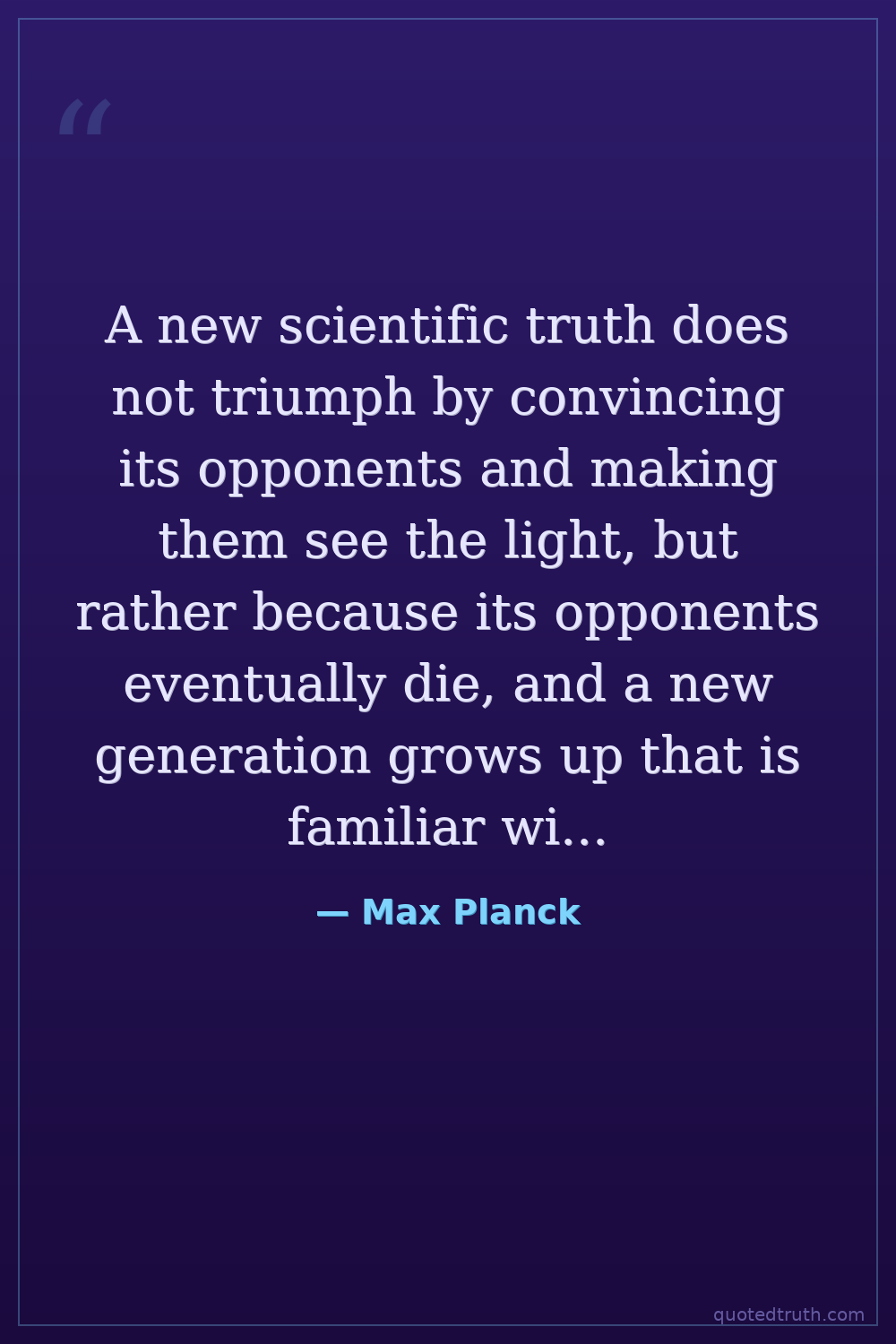
Revolutionary ideas rarely win over entrenched experts through argument or evidence. Instead, progress happens generationally: older authorities who built careers on prior frameworks hold their positions until they retire or pass away, while younger thinkers who learned the new ideas as students accept them as normal. Acceptance is a demographic process, not a rational one, and paradigm shifts move at the pace of human mortality rather than debate.
Relevance to Max Planck
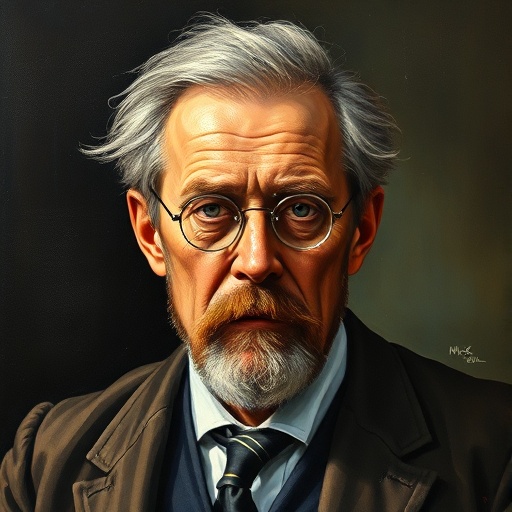
Planck lived this bitterly. His 1900 quantum hypothesis was resisted for decades by classical physicists, and even he initially doubted it. He watched Einstein, Bohr, and Heisenberg build quantum mechanics while senior contemporaries dismissed it. Having won the 1918 Nobel Prize yet still fighting for his discovery's acceptance, Planck drew this conclusion from direct experience: conservative peers never converted, but graduate students raised on quanta simply took them for granted.
The era
Written in his 1950 Scientific Autobiography, Planck reflected on a half-century that saw physics torn apart. Relativity and quantum mechanics shattered Newtonian certainty between 1900 and 1930, splitting the field into generations. Planck also survived two world wars, Nazi persecution of Jewish physicists, and the 1945 execution of his son Erwin. His observation captured a century where scientific revolutions, political upheaval, and generational turnover collided catastrophically in German intellectual life.
AI-generated insights based on extensive research and information for context. Factual errors? Email [email protected].