Edgar Allan Poe — "A novelist, for example, need have no care of his moral. It is there -- that is …"
A novelist, for example, need have no care of his moral. It is there -- that is to say, it is somewhere -- and the moral and the critics can take care of themselves. When the proper time arrives, all that the gentleman intended, and all that he did not intend, will be brought to light, in the "Dial," or the "Down-Easter," together with all that he ought to have intended, and the rest that he clearly meant to intend: -- so that it will all come very straight in the end.
Click any product to generate a realistic preview. Up to 3 at a time. * Initial load can take up to 90 seconds — revising the preview in another color is nearly instant.
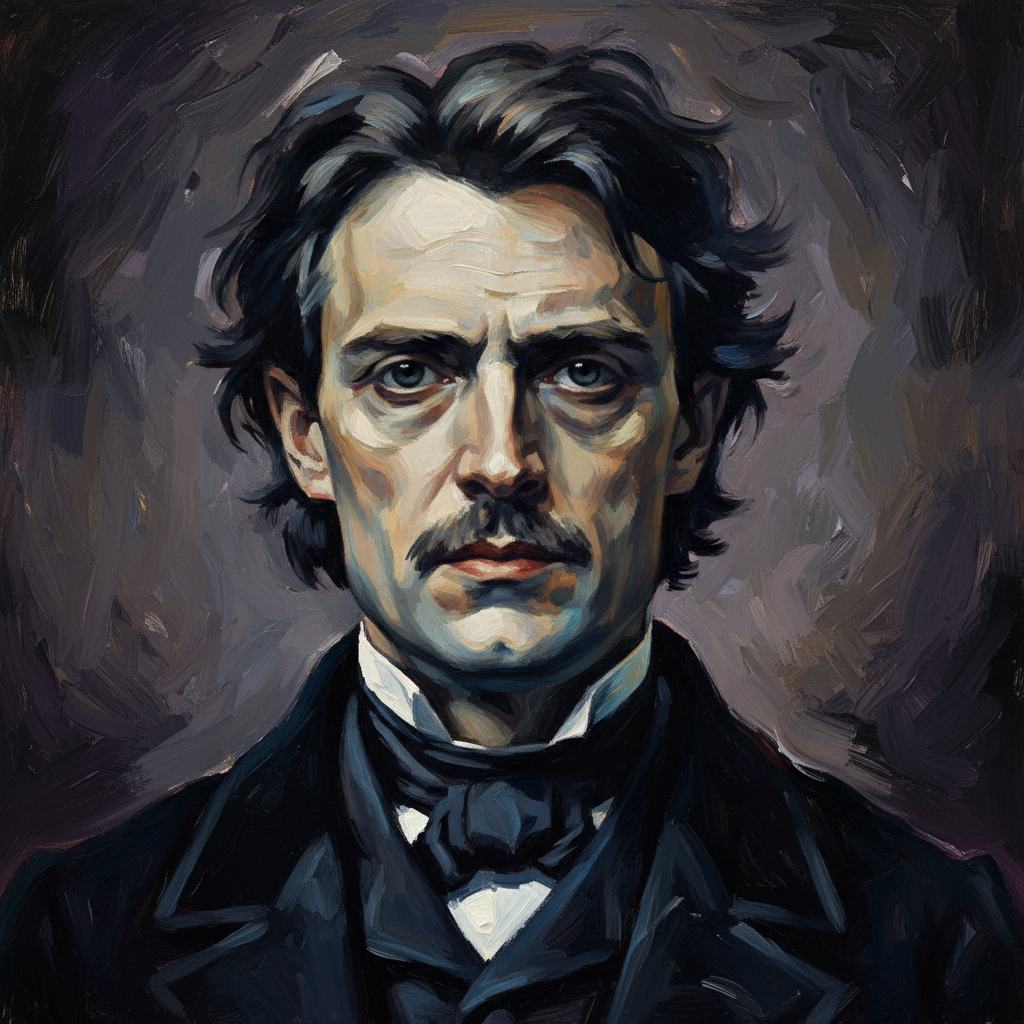
American Gothic poet and short-story writer who invented the detective story (Murders in the Rue Morgue) and shaped horror literature.
Closely associated with
Nathaniel Hawthorne (fellow American Gothic) and Charles Baudelaire (his French translator and torch-bearer).
For an intellectual contrast, see
Ralph Waldo Emerson, Transcendentalist optimist of self-reliance — Poe wrote essays attacking the entire Transcendentalist circle as didactic and intellectually thin — he derisively called them 'Frogpondians' and treated their cheerful mysticism as the literary opposite of his macabre realism.