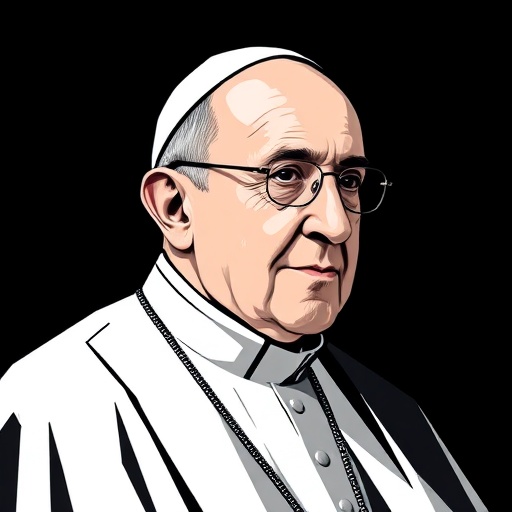
Pope Francis — "A pastor who does not pray is a pastor who is in danger."
A pastor who does not pray is a pastor who is in danger.
A pastor who does not pray is a pastor who is in danger.
Click any product to generate a realistic preview. Up to 3 at a time.
* Initial load can take up to 90 seconds — revising the preview in another color is nearly instant.
"The roots of evil are in the heart of man."
"If someone is gay and he searches for the Lord and has good will, who am I to judge? We shouldn’t marginalize people for this. They must be integrated into society."
"The globalized technological paradigm has inverted the order of priorities: the useful is now the criterion of truth."
"We are all sinners, but we are all loved by God."
"The Church is not a museum of saints, but a hospital for sinners."
First Latin American and Jesuit pope (2013-), who has steered the Catholic Church toward pastoral inclusion on LGBTQ pastoral care, divorced Catholics, and climate. Closely associated with Pope John XXIII (the Vatican II reformer pope) and Cardinal Walter Kasper (his theological ally on pastoral reform). For an intellectual contrast, see Cardinal Raymond Burke, American traditionalist cardinal, former head of the Vatican Apostolic Signatura — Burke is the public face of Catholic traditionalism that views Francis's pastoral approach as doctrinally dangerous — he has formally challenged Amoris Laetitia and other Francis reforms.
Found in 1 providers: grok
1 source checked
This quote warns that a religious leader who neglects personal prayer loses the spiritual grounding essential to their vocation. Without prayer, a pastor becomes spiritually hollow — vulnerable to pride, self-reliance, and detachment from God's guidance. The danger is both personal and pastoral: a prayerless leader risks mistaking their own agenda for divine will, burning out from self-sufficiency, and ultimately failing the people they are called to serve.
As a Jesuit, Francis formed his spirituality through the Ignatian tradition of contemplative prayer and discernment. Before becoming Pope, he spent hours daily in prayer as Archbishop of Buenos Aires, often seen in silent adoration before the tabernacle. His reformist agenda specifically targets clericalism — clergy who become bureaucratic managers rather than shepherds — and prayer is his antidote. He frequently tells priests that a busy schedule is no excuse for neglecting prayer.
Francis became Pope in 2013 amid cascading Church crises: clergy sexual abuse cover-ups, Vatican Bank financial scandals, and plummeting Mass attendance across the Western world. Secular culture increasingly framed religion as irrelevant, while internal Church politics rewarded administrative competence over spiritual depth. In this environment, Francis urgently called clergy back to prayer as the foundation of authentic ministry, insisting the Church's credibility depended on pastors genuinely transformed by relationship with God.
AI-generated insights based on extensive research and information for context. Factual errors? Email [email protected].
Your cart is empty