What it means
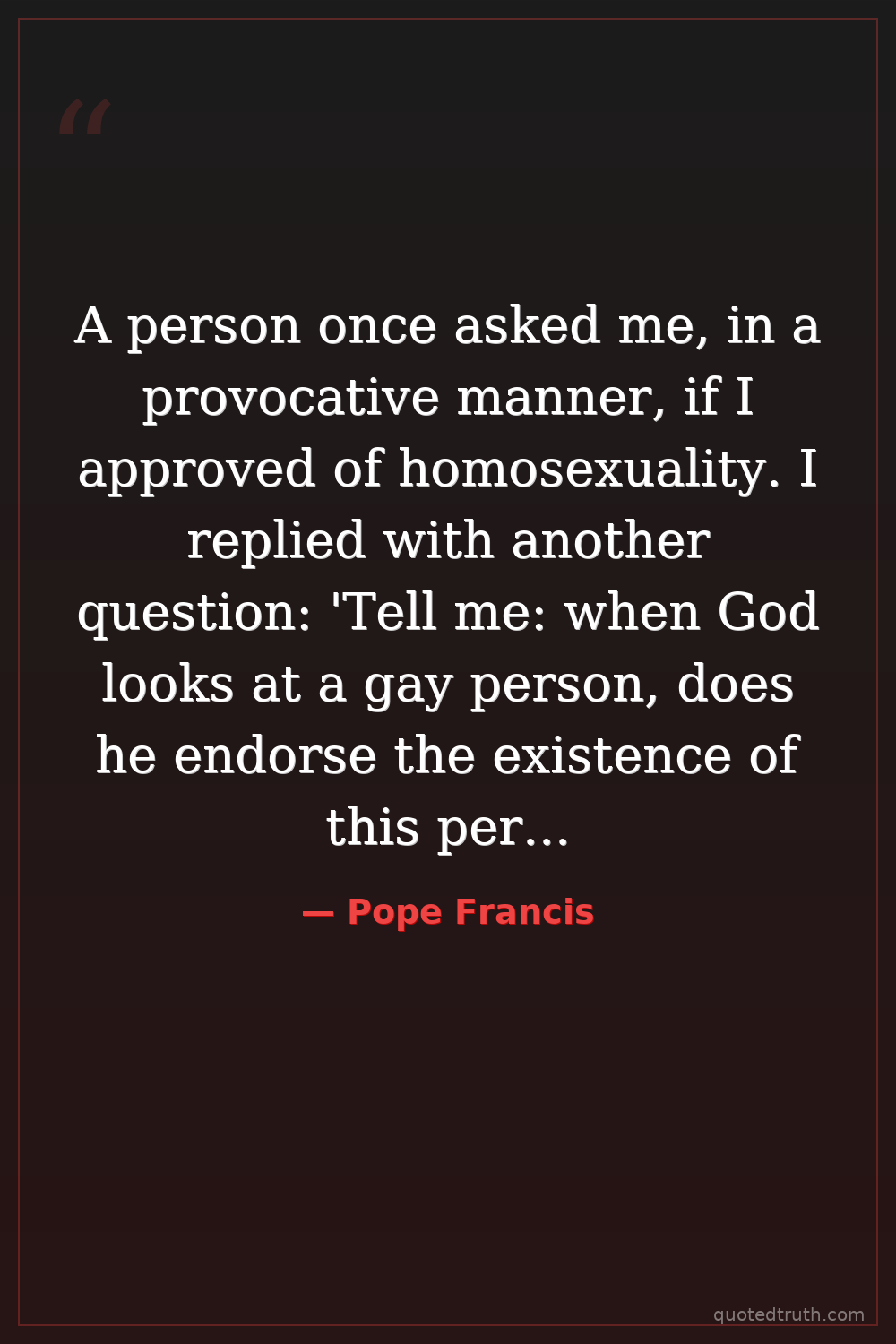
Rather than accepting or rejecting the binary of institutional approval, this shifts the question to divine relationship. Francis argues God's love is unconditional and personal — if God endorses the existence of every person with love, the moral framing changes entirely. It invites the questioner to reconsider the premise: the real issue isn't human approval but whether any person stands outside God's love, which Francis implies they do not.
Relevance to Pope Francis
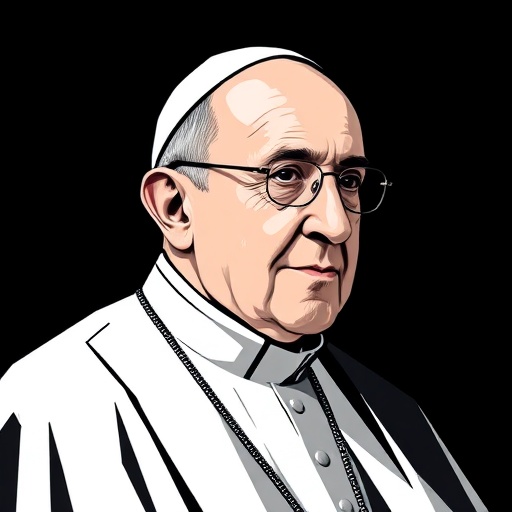
Francis, the first Jesuit Pope from Argentina elected in 2013, built his papacy on pastoral mercy over doctrinal rigidity. His famous 'Who am I to judge?' remark came the same year. As former Archbishop of Buenos Aires who served the marginalized, he consistently prioritized accompaniment over condemnation. Redirecting a charged question into one about God's love is classic Francis: refusing culture-war framing while affirming every person's dignity.
The era
Francis became Pope in 2013, a watershed moment for global LGBTQ visibility. Same-sex marriage was legalizing across Western nations; the U.S. Supreme Court ruled in Obergefell v. Hodges in 2015. The Catholic Church faced intense pressure to clarify its stance. Simultaneously, Francis navigated deep conservative-progressive rifts within the institution. His deflection allowed pastoral warmth without doctrinal reversal — a tightrope defining his entire papacy.
AI-generated insights based on extensive research and information for context. Factual errors? Email [email protected].