What it means
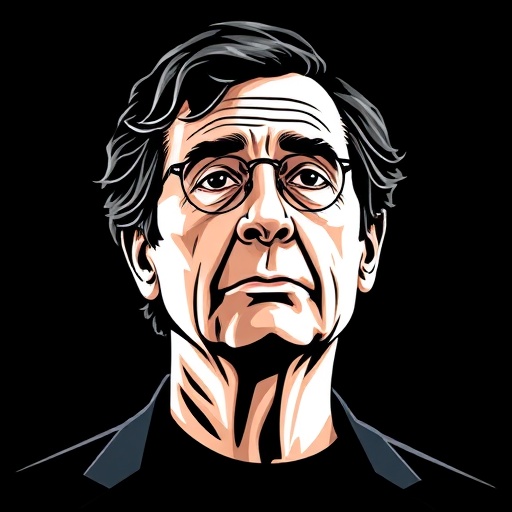
Sagan draws a precise line: an atheist requires compelling evidence that God doesn't exist, which he argues is impossible to obtain. Because God can be defined as existing beyond any testable realm—outside observable time and space, with unlimited attributes—no scientific investigation can rule him out. Sagan isn't defending religion; he's applying rigorous logic: you cannot falsify an unfalsifiable claim, so certainty of God's nonexistence is scientifically unjustifiable.
Relevance to Carl Sagan
Sagan openly identified as agnostic throughout his career, a position this quote precisely captures. His work in astronomy and astrophysics trained him to demand evidence before accepting any claim, but also to acknowledge what evidence cannot prove. His Cosmos series and The Demon-Haunted World explored the boundary between science and faith without dismissing wonder. He found meaning in the universe itself rather than through organized religion or hard denial of the divine.
The era
In the 1970s–90s, when Sagan was most prominent, American culture navigated rising religious conservatism—the Moral Majority, Reagan-era culture wars—alongside landmark science: Voyager flybys, early SETI searches, expanding cosmological models. New Atheism as a movement hadn't crystallized yet. Sagan occupied a culturally important middle ground, defending science against creationism and pseudoscience while refusing atheism's dogmatic certainty, making his nuanced agnosticism both intellectually rigorous and strategically influential in public discourse.
AI-generated insights based on extensive research and information for context. Factual errors? Email [email protected].