What it means
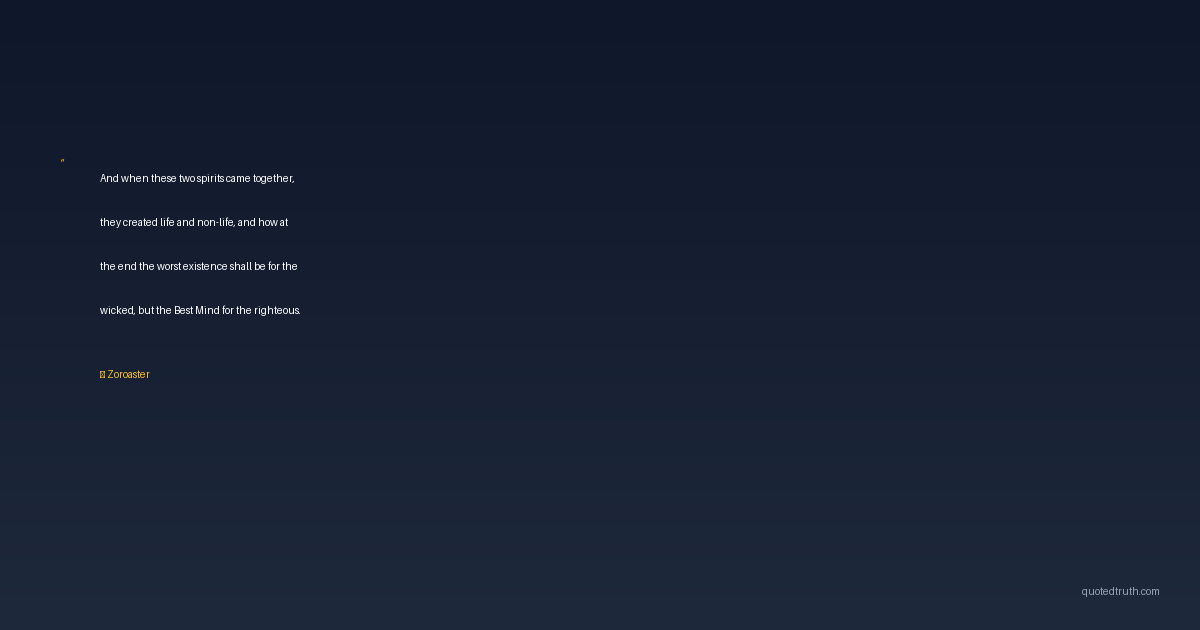
Two opposing forces, one good and one harmful, meet and together produce everything that exists and everything that decays. This confrontation sets up a moral ledger: people who choose cruelty and deceit end up in the worst possible state, while those who choose honesty and good thinking arrive at the highest state of mind and being. Your choices between these two forces determine your ultimate outcome.
Relevance to Zoroaster
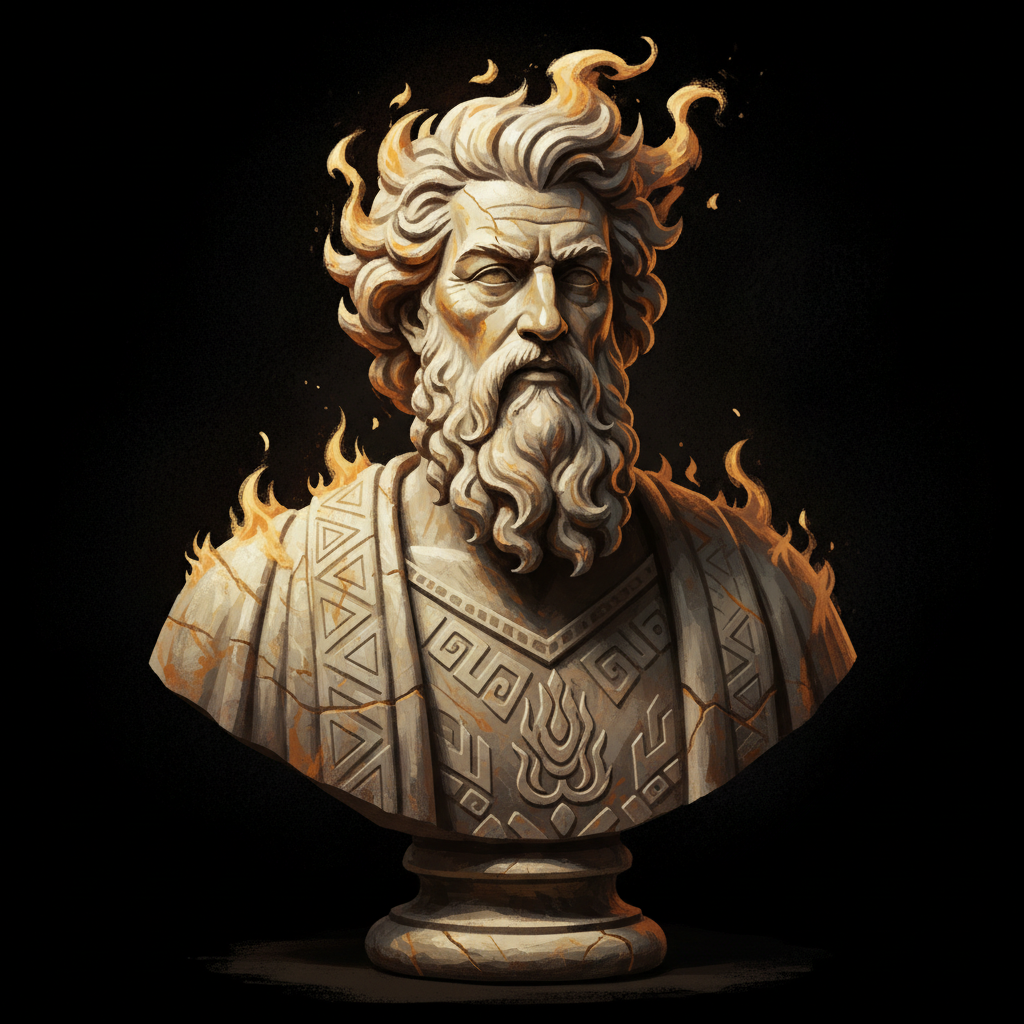
Zoroaster founded a religion built on exactly this dualism between Spenta Mainyu (good spirit) and Angra Mainyu (destructive spirit), with human choice as the deciding battleground. As a priest-prophet who reformed older Iranian polytheism, he made ethical decision-making, not ritual sacrifice, the core of salvation. The phrase Best Mind (Vohu Manah) is one of his signature divine attributes, appearing throughout the Gathas he composed.
The era
Zoroaster likely lived around 1500-1000 BCE on the Central Asian steppes, amid pastoral Indo-Iranian tribes practicing cattle raids, blood sacrifice, and polytheistic nature worship. His teaching of a single wise creator and a cosmic moral struggle was radical against this backdrop. The era predated writing in the region, so his hymns were transmitted orally for centuries before influencing Persian empires, Judaism, Christianity, and Islamic concepts of heaven, hell, and final judgment.
AI-generated insights based on extensive research and information for context. Factual errors? Email [email protected].