Enrico Fermi — "Before the war, I was doing pure physics. Now I am doing applied physics. But it…"
Before the war, I was doing pure physics. Now I am doing applied physics. But it is still physics.
Before the war, I was doing pure physics. Now I am doing applied physics. But it is still physics.
Click any product to generate a realistic preview. Up to 3 at a time.
* Initial load can take up to 90 seconds — revising the preview in another color is nearly instant.
"The world has been changed, for good or ill."
"I believe that science is a universal language, and that it can bring people together from all over the world."
"Young man, if I could remember the names of these [muons, pions, etc.] particles, I would have been a botanist."
"The greatest enemy of knowledge is not ignorance, it is the illusion of knowledge."
"I have been very lucky in my life. I have always been able to do what I wanted to do, and I have always been able to do it with people I liked."
Found in 1 providers: grok
1 source checked
The distinction between pure and applied science is one of intent, not substance. Fundamental laws of physics govern both theoretical research and practical engineering equally. Whether chasing abstract understanding or solving an immediate problem, the intellectual toolkit and underlying reality stay the same. A scientist's core identity survives the shift from curiosity-driven to necessity-driven work — the discipline transcends the purpose it currently serves.
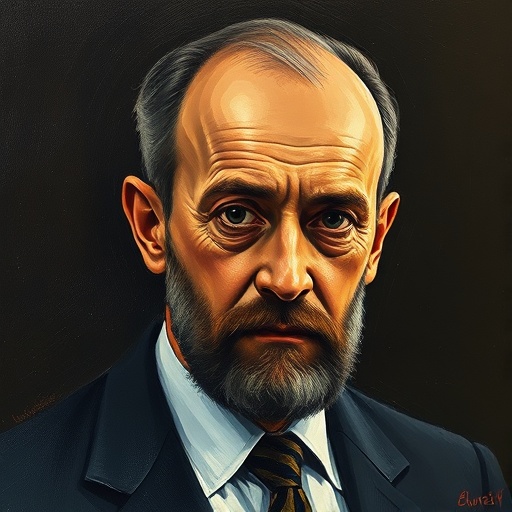
Fermi spent his early career in Italy doing theoretical nuclear physics, winning the Nobel Prize in 1938. Fleeing fascism, he arrived in America just as WWII demanded scientists pivot to weapons work. He built Chicago Pile-1, the first nuclear reactor, in 1942 under the Manhattan Project. His legendary 'Fermi estimation' method — applied reasoning from first principles — showed he never separated the pure from the applied; both demanded the same rigorous thinking.
The 1940s saw academic science conscripted into total war. The Manhattan Project (1942–1945) transformed theoretical physicists into engineers of mass destruction almost overnight. For researchers like Fermi, the prewar ivory tower of European academic physics gave way to secret government laboratories and military urgency. The atomic bomb's success — and Hiroshima's devastation — sparked permanent debate about whether science could remain neutral, or whether pure and applied were ever truly separable.
AI-generated insights based on extensive research and information for context. Factual errors? Email [email protected].
Your cart is empty