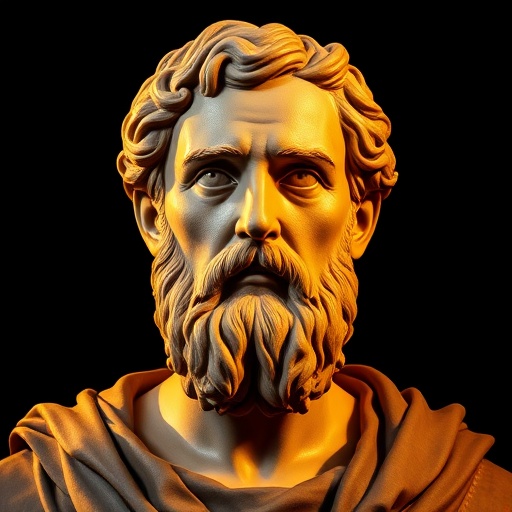
Saint Paul — "But I keep under my body, and bring it into subjection: lest that by any means, …"
But I keep under my body, and bring it into subjection: lest that by any means, when I have preached to others, I myself should be a castaway.
But I keep under my body, and bring it into subjection: lest that by any means, when I have preached to others, I myself should be a castaway.
Click any product to generate a realistic preview. Up to 3 at a time.
* Initial load can take up to 90 seconds — revising the preview in another color is nearly instant.
"I have become all things to all people so that by all possible means I might save some."
"For Adam was first formed, then Eve. And Adam was not deceived, but the woman being deceived was in the transgression."
"Let your reasonableness be known to everyone. The Lord is at hand."
"For the message of the cross is foolishness to those who are perishing, but to us who are being saved it is the power of God."
"For I bear in my body the marks of the Lord Jesus."
Found in 2 providers: gemini,grok
2 sources checked
Paul says he rigorously disciplines his physical desires and keeps them under strict control. He fears that after urging others to live righteously, he himself could fail the very standard he preached and be disqualified. The point is that teaching or leading does not exempt anyone from the same self-restraint demanded of followers. Personal integrity must match public instruction, or the messenger forfeits credibility and the reward promised to the faithful.
Paul was a former Pharisee turned traveling apostle who planted churches across the Roman world and wrote much of the New Testament. Trained in strict Jewish law under Gamaliel and later a tentmaker by trade, he knew both rigorous discipline and manual labor. Having persecuted Christians before his Damascus conversion, he carried acute awareness that zeal without integrity condemns. This verse mirrors his athletic metaphors and relentless drive to practice what he preached.
First-century Corinth hosted the Isthmian Games, second only to the Olympics, where athletes trained brutally for a perishable pine wreath. Paul wrote this around 55 AD to Corinthian Christians surrounded by temple prostitution, gladiatorial spectacle, and Greco-Roman indulgence. Stoic philosophers also prized self-mastery, making his language resonate broadly. Early Christian leaders faced constant scrutiny from Roman authorities and rival teachers, so a preacher's moral collapse could discredit the fragile movement entirely.
AI-generated insights based on extensive research and information for context. Factual errors? Email [email protected].
Your cart is empty