What it means
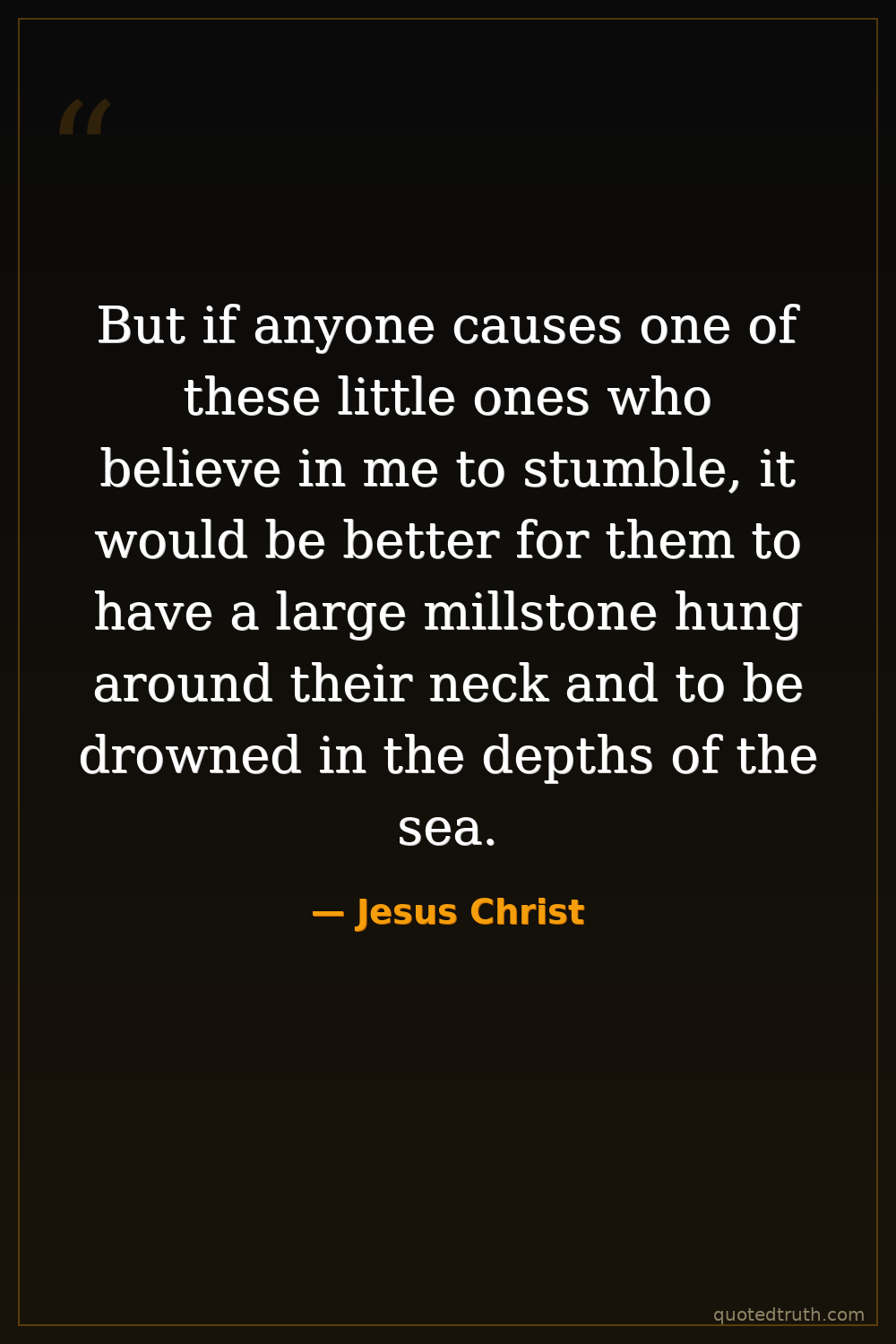
Leading vulnerable people—especially children or new believers—into moral harm is among the worst offenses imaginable. The punishment deserved would be so severe that a violent, immediate death by drowning would actually be a mercy compared to the true consequences. Protecting the innocent from spiritual and moral corruption is a non-negotiable duty, and anyone who exploits their trust faces devastating accountability.
Relevance to Jesus Christ
Jesus repeatedly elevated children and the marginalized, welcoming them when his disciples tried to shoo them away. As a rabbi who gathered ordinary fishermen, tax collectors, and outcasts, he treated the socially small as spiritually central. His fierce protectiveness here mirrors his table-flipping anger at the temple—gentle with the weak, unsparing toward those who exploit them. Guarding the vulnerable was core to his ministry and kingdom ethic.
The era
In first-century Judea under Roman occupation, children and the poor held almost no legal standing and were easily exploited. Millstones—heavy basalt wheels turned by donkeys—were familiar village objects, making the image visceral to listeners. Drowning was considered a particularly shameful Gentile execution, denying proper Jewish burial. Religious leaders often burdened common people with heavy rules while ignoring the vulnerable, a hypocrisy Jesus repeatedly confronted throughout his public teaching.
AI-generated insights based on extensive research and information for context. Factual errors? Email [email protected].