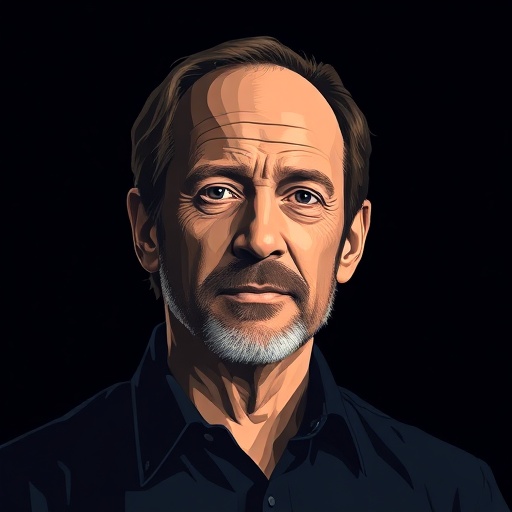
Tim Berners-Lee — "Centralization of the web gives too much power to a few companies. This is dange…"
Centralization of the web gives too much power to a few companies. This is dangerous.
Centralization of the web gives too much power to a few companies. This is dangerous.
Click any product to generate a realistic preview. Up to 3 at a time.
* Initial load can take up to 90 seconds — revising the preview in another color is nearly instant.
"The web is a reflection of humanity, and humanity is messy."
"The web is now controlled by a handful of powerful companies."
"The web is a powerful weapon. We need to make sure it's used for good."
"We need to make sure the web is a force for good, not evil."
"My biggest hope for the web is that it will continue to be a tool for good, for collaboration, and for understanding."
British computer scientist who invented the World Wide Web at CERN in 1989 and founded the W3C, championing open web standards. Closely associated with Vint Cerf (TCP/IP co-creator and 'father of the internet') and Marc Andreessen (Mosaic browser creator and Netscape co-founder). For an intellectual contrast, see Mark Zuckerberg, Facebook (Meta) founder — Zuckerberg's walled-garden Facebook is the canonical contemporary opposite of Berners-Lee's open-web vision; Berners-Lee's Solid project and 'recapture the web' essays are explicitly written as a rebuttal to the platform-monopoly model Facebook pioneered.
Found in 1 providers: grok
1 source checked
When a handful of corporations control most internet infrastructure, content distribution, and user data, they accumulate outsized influence over information flow, commerce, and political discourse. This concentration creates systemic risk: those companies can censor, manipulate, or monetize users without meaningful accountability. A genuinely open web distributes power broadly among many participants rather than funneling control to a few corporate gatekeepers.
Berners-Lee invented the World Wide Web in 1989 as an open, decentralized system — deliberately releasing it royalty-free so no single entity could own it. He founded the W3C to maintain open standards and later launched the Contract for the Web initiative. Watching platforms like Google, Meta, and Amazon dominate the web he created directly contradicted his foundational vision of a democratic, distributed information network for all humanity.
Berners-Lee voiced this warning as tech giants consolidated dominance across the 2010s and 2020s. Five companies — Google, Meta, Amazon, Apple, Microsoft — came to control cloud infrastructure, search, social media, and app distribution. The EU's Digital Markets Act and US antitrust investigations reflected growing regulatory alarm. Cambridge Analytica demonstrated how centralized data becomes a political weapon. The original open-web vision had fractured into walled gardens with billions of captive users.
AI-generated insights based on extensive research and information for context. Factual errors? Email [email protected].
Your cart is empty