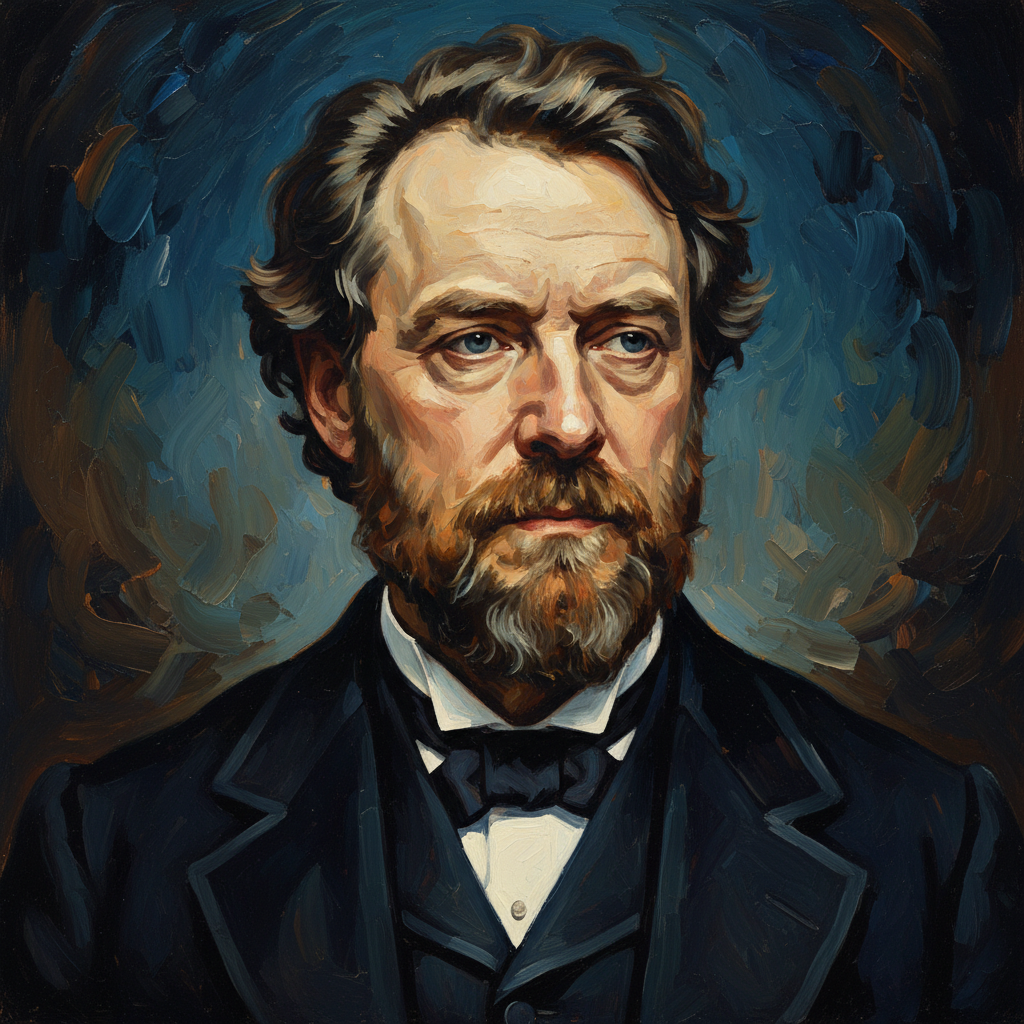
Charles Dickens — "Charity begins at home, and justice begins next door."
Charity begins at home, and justice begins next door.
Charity begins at home, and justice begins next door.
Click any product to generate a realistic preview. Up to 3 at a time.
* Initial load can take up to 90 seconds — revising the preview in another color is nearly instant.
"I am the most intensely and profusely social of all men, but I must have a quantity of clear, solitary, penetrating, and uncomforting observation."
"I am not a believer in the wisdom of crowds."
"I have known a good many people who have had their heads cut off, and I never knew one who didn't deserve it."
"The pain of parting is nothing to the joy of meeting again."
"I have always been of the opinion that it is better to be happy than to be rich, and that it is better to be good than to be great."
English novelist whose Oliver Twist (1838), A Christmas Carol (1843), and Bleak House (1852) made Victorian poverty inescapable for the British middle class. Closely associated with William Makepeace Thackeray (Vanity Fair rival and contemporary serial novelist) and George Eliot (later Victorian giant who built on Dickens's social-realism foundation). For an intellectual contrast, see Jeremy Bentham, founder of utilitarianism (1748-1832) — Mr. Gradgrind in Hard Times (1854) is a direct caricature of Bentham-style social calculation — 'Facts, sir, nothing but Facts!' is the most-cited literary attack on utilitarianism's reduction of human life to measurable units. Dickens's serialized social-novel form is itself a rebuke of utilitarian abstraction.
Your cart is empty