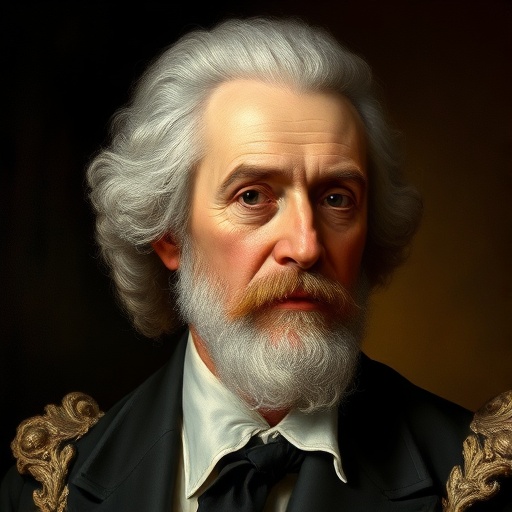
Antoine Lavoisier — "Chemistry is a science of facts and experiments, and not of opinions."
Chemistry is a science of facts and experiments, and not of opinions.
Chemistry is a science of facts and experiments, and not of opinions.
Click any product to generate a realistic preview. Up to 3 at a time.
* Initial load can take up to 90 seconds — revising the preview in another color is nearly instant.
"I have always sought to unite theory with practice."
"The human mind, like the human body, requires nourishment."
"The success of charlatans, sorcerors, and alchemists—and all those who abuse public credulity—is founded on errors in this type of calculation."
"I have been so lucky in life, that I have had nothing to do but to collect the fruits of the labours of others."
"We must trust to nothing but facts: these are presented to us by nature and cannot deceive."
Found in 1 providers: grok
1 source checked
Knowledge must be earned through evidence, not declared through authority. Chemistry — and all empirical inquiry — must be grounded in observable, repeatable experiments and documented measurements, not in tradition, inherited dogma, or personal conjecture. If a claim cannot be tested and verified through experiment, it does not belong in science. Truth is what nature consistently demonstrates under controlled conditions, not what even the most respected thinkers happen to believe or assert.
Lavoisier dismantled the dominant phlogiston theory not by debating it — but by measuring. His meticulous experiments demonstrating that combustion consumes oxygen, not releasing a fictional substance, exemplify this belief precisely. He invented the first systematic chemical nomenclature and established the law of conservation of mass through exact quantitative measurements. Every major contribution came from documented experiments, not philosophical argument, replacing two centuries of alchemical speculation with verifiable, reproducible science.
Lavoisier worked during the Enlightenment, when thinkers across Europe were dismantling authority-based knowledge in favor of reason and observation. In chemistry, centuries of alchemical tradition and the widely accepted phlogiston theory — a popular but untestable explanation for combustion — still dominated practice. His insistence that facts and experiments govern the science was a direct strike against inherited dogma at the precise moment when empirical reasoning was reshaping every branch of Western intellectual life.
AI-generated insights based on extensive research and information for context. Factual errors? Email [email protected].
Your cart is empty