What it means
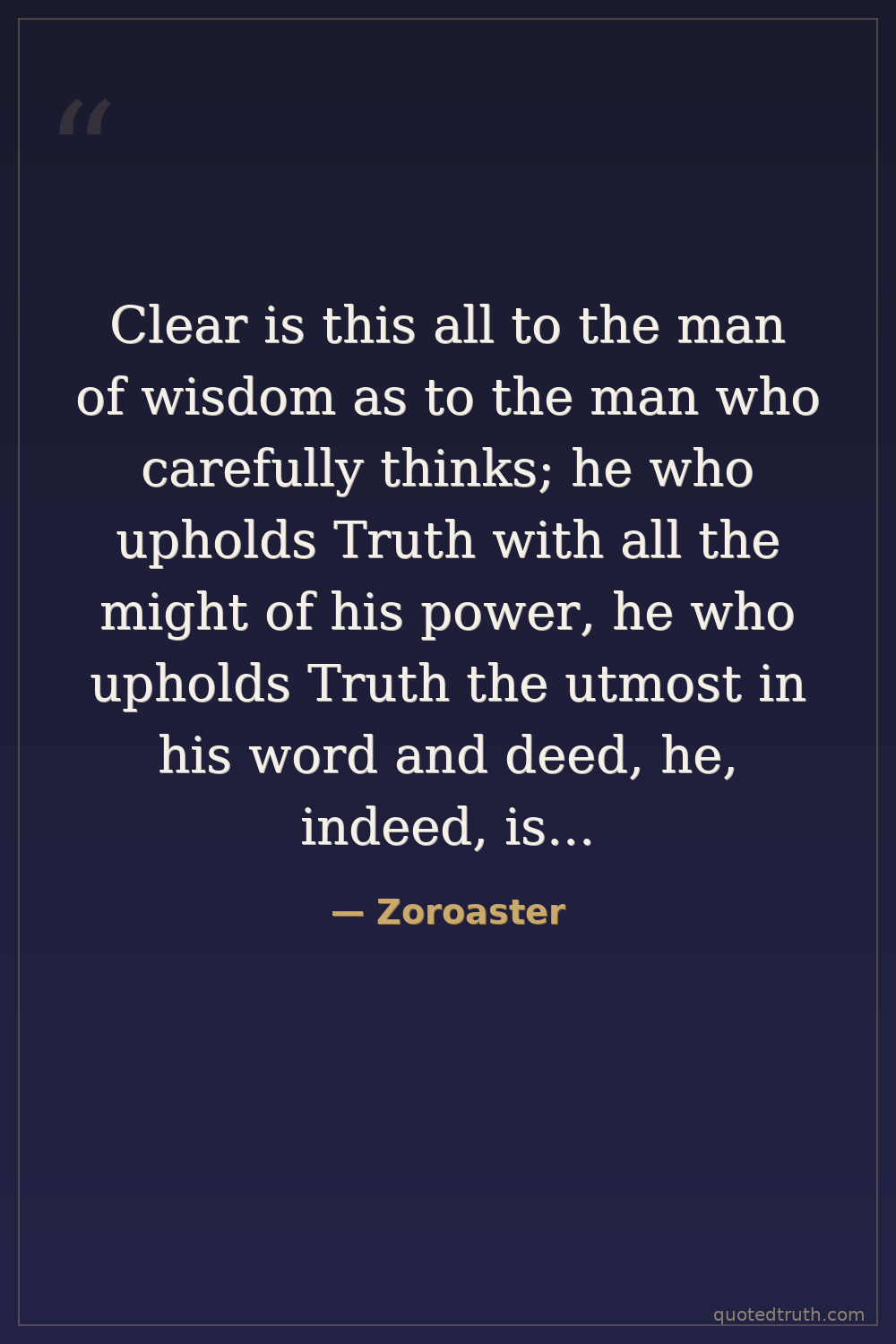
Anyone who thinks carefully can see this plainly: the person who defends truth with every ounce of their strength, whose honesty shows up in both what they say and what they do, is the most valuable ally to the divine. Integrity is not just an inner belief but something proven through consistent action and speech. Real devotion means aligning thought, word, and deed with truth, not merely professing it.
Relevance to Zoroaster
Zoroaster built his entire religion around Asha, the cosmic principle of truth and right order, opposed to Druj, the lie. As a prophet who reformed ancient Iranian religion, he preached the famous triad of good thoughts, good words, and good deeds, which this quote directly expresses. Addressing Ahura Mazda, the wise lord he proclaimed, Zoroaster saw truth-tellers not as passive believers but as active partners in the divine struggle against falsehood.
The era
Zoroaster lived in Bronze Age Iran, likely between 1500 and 1000 BCE, among pastoral tribes practicing polytheistic ritual sacrifice and raiding. He broke from this by proclaiming one supreme deity and framing life as a moral contest between truth and deception. In a tribal world where oaths, honor, and spoken word governed trade, treaties, and justice, elevating truth-keeping to the highest cosmic virtue redefined religion as ethical commitment rather than ritual appeasement.
AI-generated insights based on extensive research and information for context. Factual errors? Email [email protected].