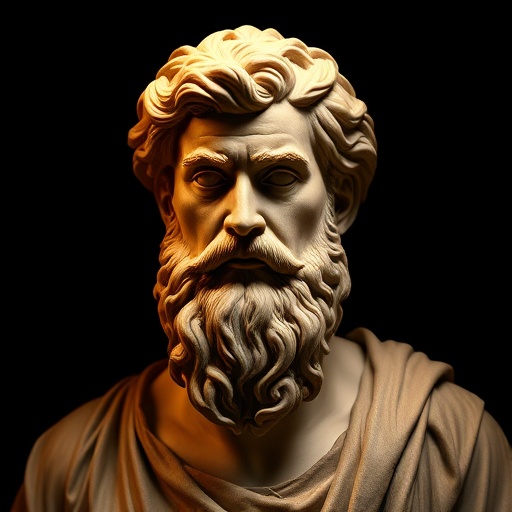
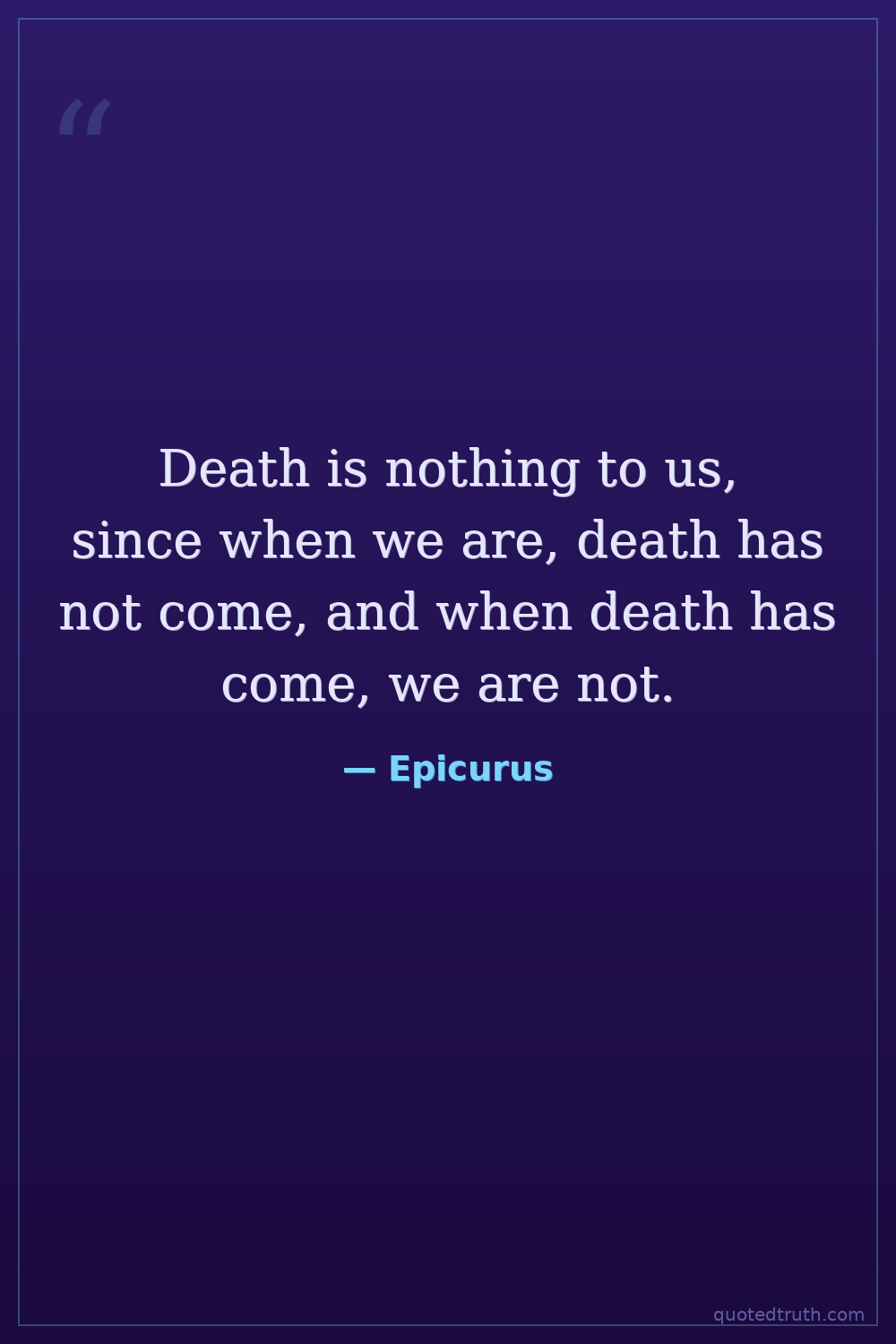
Epicurus — "Death is nothing to us, since when we are, death has not come, and when death ha…"
Death is nothing to us, since when we are, death has not come, and when death has come, we are not.
Death is nothing to us, since when we are, death has not come, and when death has come, we are not.
Click any product to generate a realistic preview. Up to 3 at a time.
* Initial load can take up to 90 seconds — revising the preview in another color is nearly instant.
"The just man is tranquil, the unjust man is full of the utmost turmoil."
"We must therefore pursue the things that make for happiness, seeing that when happiness is present, we have everything; but when it is absent, we do everything to possess it."
"We must exercise ourselves in the things which bring happiness, since, if that be present, we have everything, and if that be absent, all our actions are directed to attaining it."
"The flesh receives as unlimited the limits of pleasure; and to provide it requires unlimited time. But the mind, intellectually grasping what the end and limit of the flesh is, and banishing the terro…"
"It is better to endure a necessary pain than to suffer a constant anxiety."
Greek philosopher who founded the Garden school in Athens, whose materialist atomism and pleasure-as-tranquility ethics shaped Hellenistic thought. Closely associated with Lucretius (Roman successor whose De Rerum Natura preserved Epicurean physics). For an intellectual contrast, see the Stoics (Zeno, Epictetus, Marcus Aurelius), the Hellenistic ethical school of discipline-of-acceptance — Stoic 'live according to nature' and Epicurean 'pleasure and absence of pain' framed every ancient ethical decision — every Roman of Cicero's era was implicitly choosing one path or the other. The Stoic-Epicurean rivalry was the central philosophical debate of the Hellenistic and Roman world for 400 years.
The standard scholarly entry points to Epicurus's work: A.A. Long (UC Berkeley, Classics) — Hellenistic Philosophy: Stoics, Epicureans, Sceptics (1974); Tim O'Keefe (Georgia State University, ancient philosophy) — Epicureanism (2010); David Sedley (Cambridge, Classics) — Lucretius and the Transformation of Greek Wisdom (1998). These are the works graduate seminars cite when teaching Epicurus.
Found in 1 providers: deepseek
1 source checked
Your cart is empty