What it means
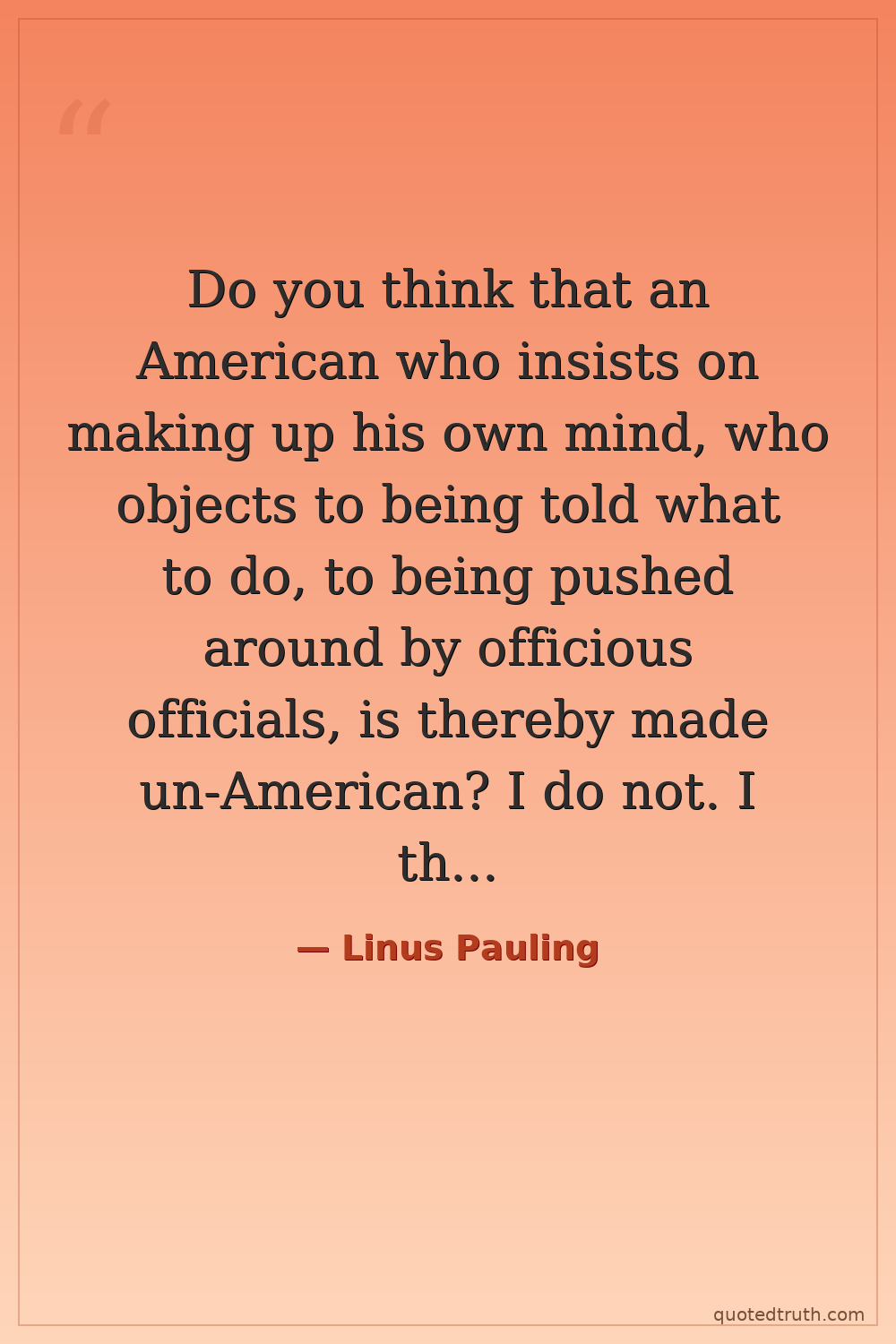
A true American, this argues, is someone who thinks independently and refuses to be bullied by overbearing officials. Demanding the right to form your own opinions — even unpopular ones — is not disloyalty; it is democracy in action. Those who accept authoritarian pressure without resistance are actually betraying American values more than those who push back. Independent judgment is the essence of American identity, not conformity to officialdom.
Relevance to Linus Pauling
Pauling lived this principle directly. During the McCarthy era, the State Department revoked his passport in 1952, calling him a security risk for his peace activism. The FBI surveilled him for years and Senate committees questioned his loyalty. Yet he refused to recant his anti-nuclear stance or silence his scientific conscience. He won the Nobel Peace Prize in 1962 partly for this courage — defying government pressure while insisting he was acting as a patriot.
The era
McCarthyism dominated 1950s America. Senator Joseph McCarthy and HUAC weaponized the label 'un-American' against dissidents, scientists, and activists suspected of communist sympathies. Loyalty oaths, blacklists, and congressional investigations silenced thousands. The nuclear arms race intensified Cold War anxiety, and questioning U.S. weapons policy invited suspicion. Pauling's petition signed by thousands of scientists against nuclear testing made him a prime target of this repressive atmosphere that punished independent conscience.
AI-generated insights based on extensive research and information for context. Factual errors? Email [email protected].