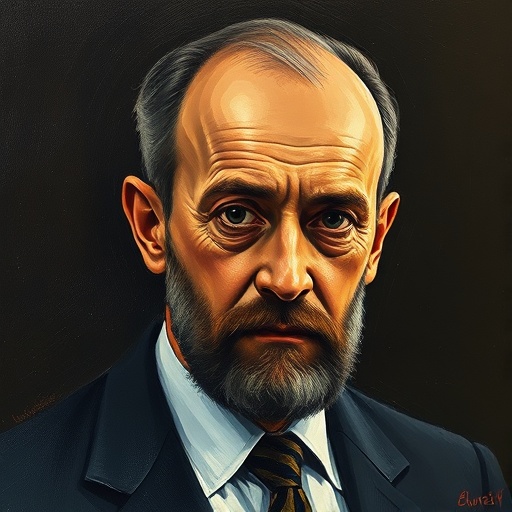
Enrico Fermi — "Don't ever do a calculation without knowing the answer."
Don't ever do a calculation without knowing the answer.
Don't ever do a calculation without knowing the answer.
Click any product to generate a realistic preview. Up to 3 at a time.
* Initial load can take up to 90 seconds — revising the preview in another color is nearly instant.
"The only way to do great work is to love what you do."
"Before the test, I was nervous and had a very bad night. But when I saw the explosion, I became very calm."
"I have always believed that physics should be simple and beautiful."
"Physics is like sex: sure, it may give some practical results, but that's not why we do it."
"The greatest discovery of all time was made by accident."
Advice to students, emphasizing intuition and estimation.
Date: Undated, but characteristic of his teaching style
ShockingFound in 1 providers: grok
1 source checked
Before running formal calculations, you should already have an intuitive estimate of the expected result. This principle prevents blind mechanical computation — if your detailed answer diverges wildly from your mental model, something went wrong. It demands genuine physical understanding, not just mathematical procedure. The goal is to use calculation as confirmation of insight, not as a substitute for thinking. Smart estimation first, precise math second.
Fermi was celebrated for Fermi estimation — making startlingly accurate approximations from sparse data. At the Trinity nuclear test in 1945, he estimated the bomb's yield by dropping torn paper scraps as the blast wave passed. As architect of Chicago Pile-1, the first nuclear reactor, he constantly checked calculations against physical intuition. His legendary teaching at Chicago and Columbia centered on building intuition before touching equations.
Fermi worked during the 1930s–1950s, before electronic computers existed for physics. Calculations were done by hand, slide rule, or human computers. The Manhattan Project's high stakes demanded accuracy — a miscalculation in reactor design or weapon physics could be catastrophic. In that environment, physical intuition served as an essential error-check. The Cold War's nuclear competition after 1945 made reliable estimation even more critical, with global consequences riding on every result.
AI-generated insights based on extensive research and information for context. Factual errors? Email [email protected].
Your cart is empty