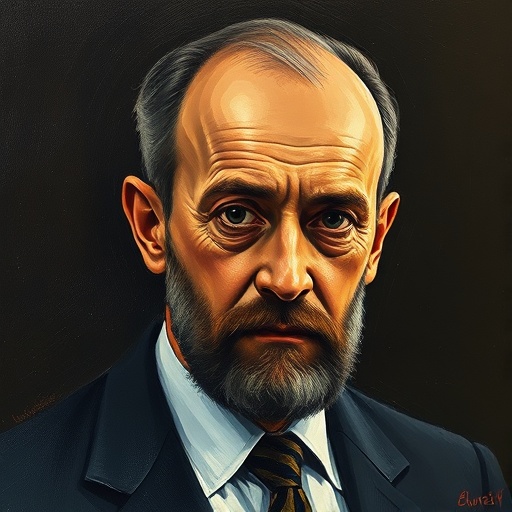
Enrico Fermi — "Don't ever do anything that you don't want to explain to a student."
Don't ever do anything that you don't want to explain to a student.
Don't ever do anything that you don't want to explain to a student.
Click any product to generate a realistic preview. Up to 3 at a time.
* Initial load can take up to 90 seconds — revising the preview in another color is nearly instant.
"We must never forget the lessons of history, and we must always strive to build a better future."
"The problem with statistics is that you can prove anything with them."
"I am a simple man, and I like simple explanations."
"Where are they? (Referring to extraterrestrial intelligence)"
"The greatest tragedy of science is the slaying of a beautiful hypothesis by an ugly fact."
Found in 1 providers: grok
1 source checked
The quote advocates a simple ethical test: before acting, ask whether you could transparently explain your decision to a curious, honest student. It champions intellectual accountability and moral clarity — if you'd be embarrassed or evasive explaining your reasoning to someone learning, the action probably lacks integrity. It's a practical guide for staying honest, keeping methods defensible, and never hiding behind complexity or authority to justify questionable choices.
Fermi was legendary both as a physicist and as a gifted teacher who trained dozens of Nobel laureates at the University of Chicago. His famous estimation method — breaking complex problems into teachable steps — embodied his belief that real understanding means explaining clearly. Yet he also built the first nuclear reactor under the Manhattan Project, wrestling with whether science's most powerful creations could be morally accounted for to future generations.
Fermi lived through the atomic era's defining tension: scientists possessed world-altering capabilities while democratic accountability remained limited. The Manhattan Project operated in wartime secrecy; civilian oversight came only after Hiroshima. Post-war debates about nuclear testing, weapons proliferation, and scientists' moral responsibility dominated public discourse. In that climate, Fermi's standard — act only on what you can openly defend — was a quiet rebuke to the culture of classified research and deferred ethical judgment.
AI-generated insights based on extensive research and information for context. Factual errors? Email [email protected].
Your cart is empty