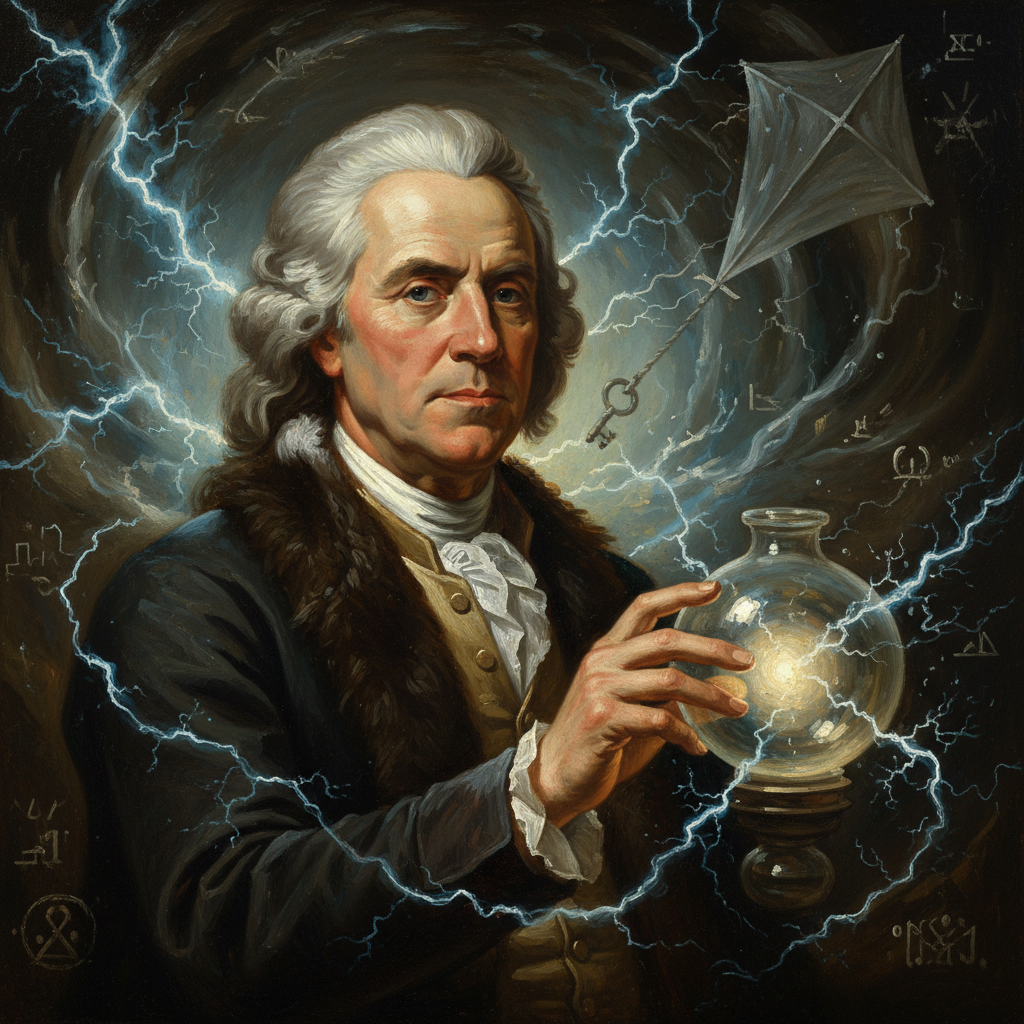
Benjamin Franklin — "Energy and persistence conquer all things."
Energy and persistence conquer all things.
Energy and persistence conquer all things.
Click any product to generate a realistic preview. Up to 3 at a time.
* Initial load can take up to 90 seconds — revising the preview in another color is nearly instant.
"A penny saved is a penny earned."
"To err is human, to repent divine, to persist devilish."
"If you would know the value of money, go and try to borrow some."
"The Constitution only guarantees the American people the right to pursue happiness. You have to catch it yourself."
"If you're going through hell, keep going."
Polymath Founding Father, diplomat, and Poor Richard's Almanack author who helped draft the Declaration of Independence and the Constitution. Closely associated with John Adams (fellow Founder, Massachusetts statesman) and Thomas Jefferson (fellow Declaration drafter). For an intellectual contrast, see Thomas Hutchinson, last royal governor of colonial Massachusetts — Franklin leaked Hutchinson's loyalist correspondence to Boston in 1772 to inflame revolutionary sentiment — Hutchinson represented the colonial-aristocrat crown-loyalty that Franklin's revolution was organized to dismantle.
Found in 1 providers: deepseek
1 source checked
Raw talent and luck matter far less than drive and follow-through. This quote argues that sustained effort combined with refusal to quit will overcome any obstacle, opposition, or difficulty. In modern terms: outwork your problems, stay consistent when results are slow, and persistence closes the gap where natural ability falls short. It is a direct endorsement of grit over genius—the conviction that dogged determination is the most reliable path to any goal.
Franklin lived this principle. Born the fifteenth of seventeen children, he left school at ten, apprenticed as a printer, and through relentless effort became America's foremost scientist, publisher, and statesman. His electricity experiments required years of methodical trial. He taught himself French, Spanish, and Italian. He founded Philadelphia's first library and fire brigade. Every institution he built and every discovery he made grew from exactly what he preached: energy applied without giving up.
In colonial America and Enlightenment Europe, the idea that persistent effort—not noble birth—could determine a person's fate was genuinely radical. The Protestant work ethic framed industry as moral virtue; the Enlightenment declared human reason and will sovereign over circumstance. For colonists building a new society without inherited aristocracy, the notion that energy conquers all validated the meritocratic promise of America itself. Franklin's saying captured a founding cultural belief: the self-made person as society's ideal.
AI-generated insights based on extensive research and information for context. Factual errors? Email [email protected].
Your cart is empty