What it means
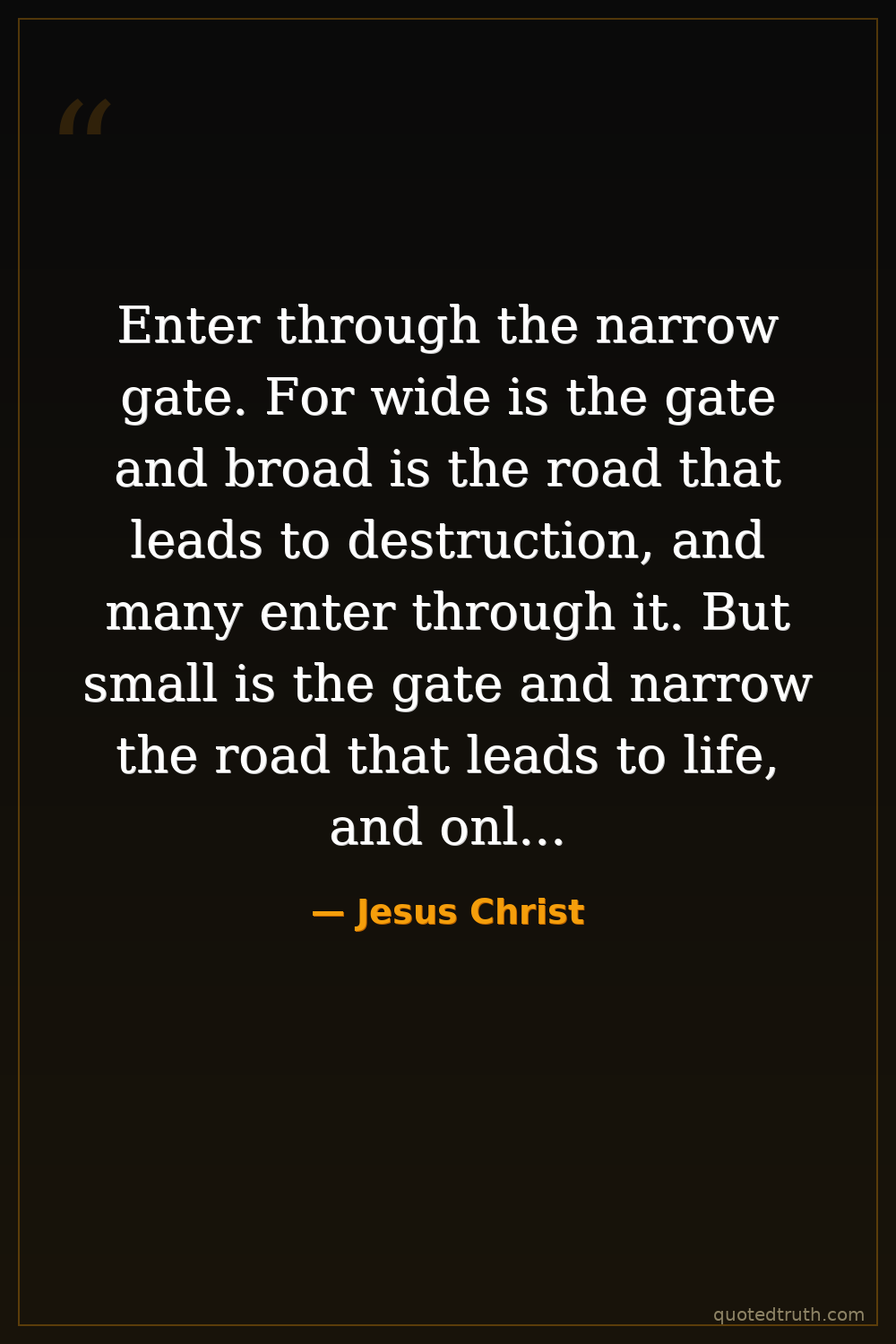
Jesus warns that the easy, popular path in life leads to ruin, while the harder, less-traveled path leads to true fulfillment. Most people drift along with the crowd because comfort and conformity feel natural, but that default trajectory ends badly. Genuine meaning and lasting life require deliberate choice, discipline, and willingness to go against the majority. Very few actually commit to that harder route, so finding it demands intentional searching rather than passive following.
Relevance to Jesus Christ
This captures Jesus's central teaching style: stark either/or choices demanding personal commitment over cultural religion. As an itinerant rabbi who gathered only a small band of disciples while crowds fluctuated, he consistently warned followers that discipleship was costly, not convenient. His Sermon on the Mount repeatedly contrasted the kingdom of God with the default moral path of his society, reflecting his conviction that salvation required active, narrow devotion rather than inherited religious status.
The era
In first-century Roman-occupied Judea, religious identity was largely inherited through Temple Judaism, and most Jews assumed covenant membership by birth. Popular messianic expectations imagined broad national deliverance. Jesus preached around 27-30 CE when Pharisaic legalism and Sadducean compromise dominated, and Greco-Roman culture promoted civic religion by majority custom. Against that backdrop, demanding individual choice of a narrow path contradicted both Jewish collective identity and Roman mass conformity, making the teaching radically countercultural.
AI-generated insights based on extensive research and information for context. Factual errors? Email [email protected].