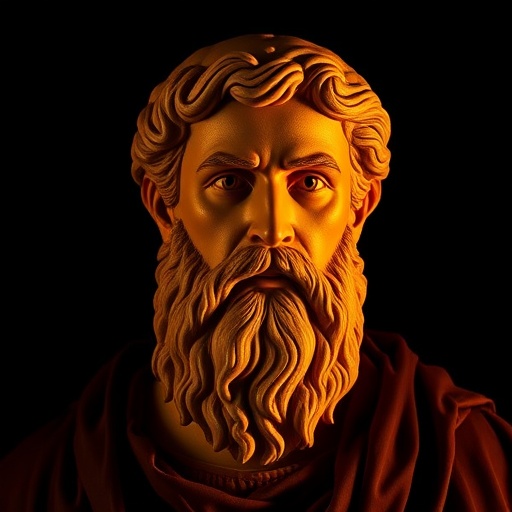
Saint Augustine — "For pride is the beginning of sin."
For pride is the beginning of sin.
For pride is the beginning of sin.
Click any product to generate a realistic preview. Up to 3 at a time.
* Initial load can take up to 90 seconds — revising the preview in another color is nearly instant.
"Give me chastity and continence, but not yet."
"The will is truly free, when it is not the slave of vices and sins."
"He who thinks he lives without sin puts aside not sin, but pardon."
"He who is not jealous is not in love."
"The world is a book and those who do not travel read only one page."
Found in 1 providers: gemini
1 source checked
Pride is the original turning away — placing the self above its proper order and elevating one's own will over God's. It is not mere arrogance but a fundamental misorientation of the soul that corrupts the will and opens the door to every subsequent sin. Where pride enters, humility exits, and without humility no moral order holds. All other transgressions flow downstream from this first, foundational act of self-exaltation.
Augustine lived this truth personally. His Confessions chronicle years of intellectual arrogance and sensual indulgence before his 386 AD conversion — pride in his own reason led him through Manichaeism and Neoplatonism before he yielded to grace. As Bishop of Hippo, he fought Pelagianism, a heresy he believed rooted in pride: the claim humans can earn salvation through willpower alone, without God's grace. His theology consistently treats pride as the mechanism by which Satan and Adam both fell.
Augustine wrote during the collapse of the Western Roman Empire — Rome sacked in 410 AD, the empire unraveling by his death in 430. Roman culture had long celebrated gloria and dignitas, civic virtues that prized personal honor and reputation. Early Christianity sharply inverted this hierarchy, teaching that self-exaltation was spiritually lethal. Simultaneously, Pelagian and Donatist controversies forced the Church to define the limits of human agency — debates where pride in human capacity was the central theological fault line.
AI-generated insights based on extensive research and information for context. Factual errors? Email [email protected].
Your cart is empty