What it means
The Earth genuinely moves through space, and when we observe stars appearing to shift position over time, that shift is caused by our planet's orbital motion around the Sun — not because the stars themselves are moving. What we perceive as stellar displacement is an optical consequence of our own changing vantage point, not physical star movement.
Relevance to Nicolaus Copernicus
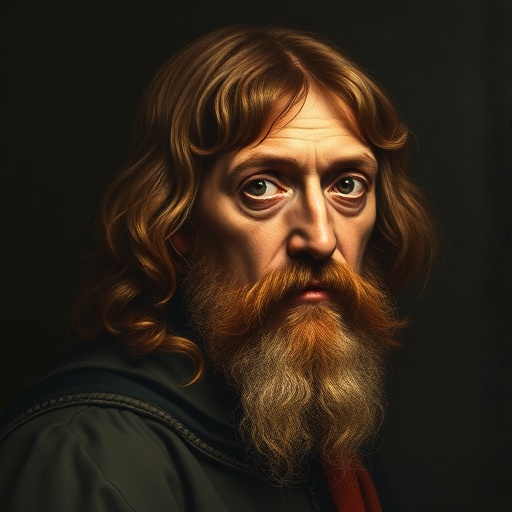
Copernicus spent decades developing his heliocentric model, published in De Revolutionibus (1543). This statement captures his central intellectual courage: insisting Earth's motion is physical fact despite church doctrine placing Earth stationary at creation's center. His life as a canon, physician, and astronomer in Poland required careful navigation of religious authority while championing empirical mathematical reasoning over theological cosmology.
The era
In the early 16th century, Ptolemaic geocentrism dominated European thought, supported by Aristotelian physics and Catholic doctrine. The Church viewed an immovable Earth as scripturally necessary. Asserting Earth's motion was intellectually dangerous — Giordano Bruno was burned for related ideas decades later. Copernicus's era witnessed Renaissance humanism encouraging fresh empirical inquiry, yet traditional cosmology held fierce institutional power throughout his lifetime.
AI-generated insights based on extensive research and information for context. Factual errors? Email [email protected].