What it means
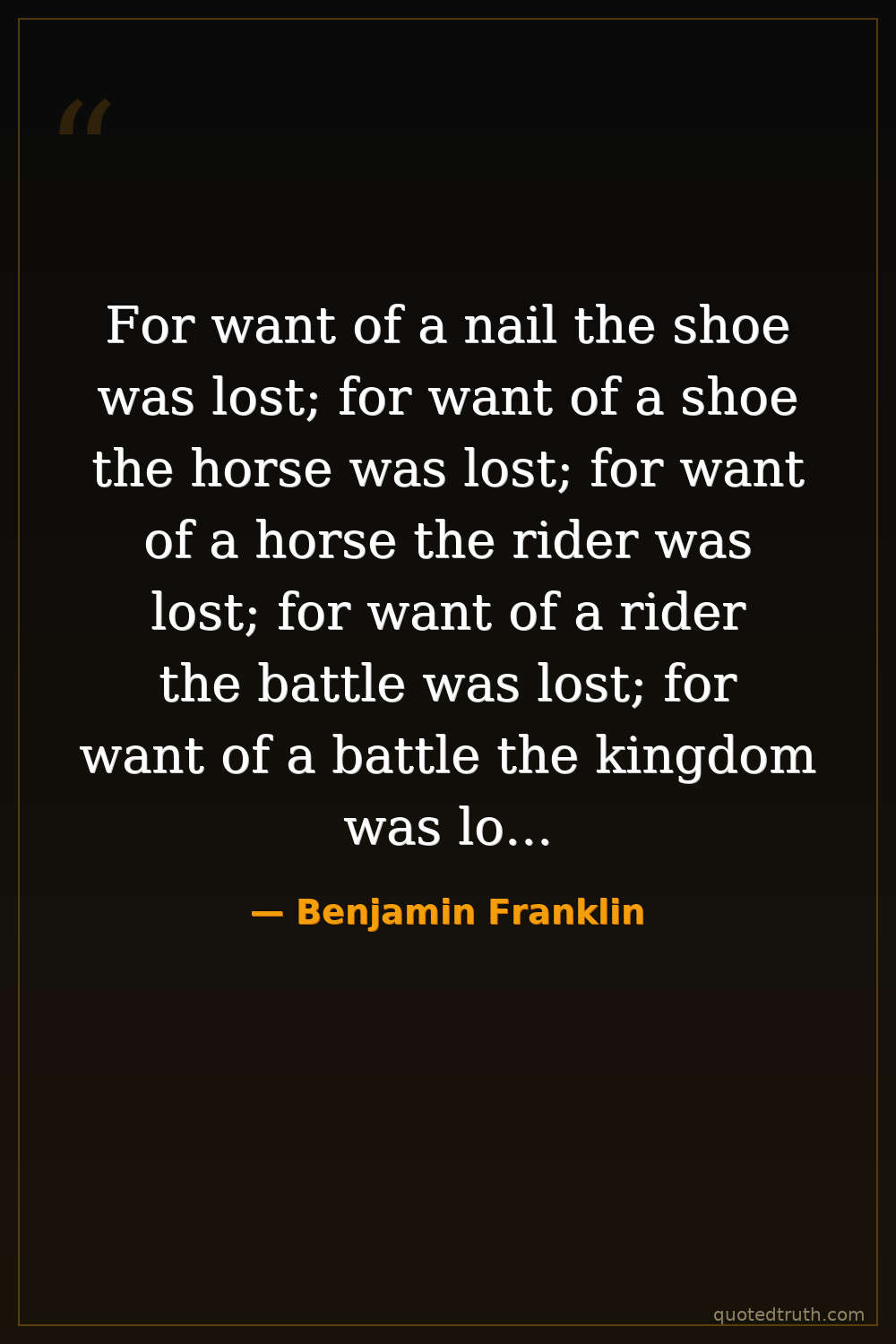
Small oversights trigger catastrophic chain reactions. A missing nail causes a lost shoe, a lost horse, a lost rider, a lost battle, and ultimately a lost kingdom. The point: negligence compounds. Every tiny detail in a system is load-bearing, and ignoring the small things doesn't keep them small — it lets them escalate into disasters. Vigilance at every level prevents collapse at the highest level.
Relevance to Benjamin Franklin
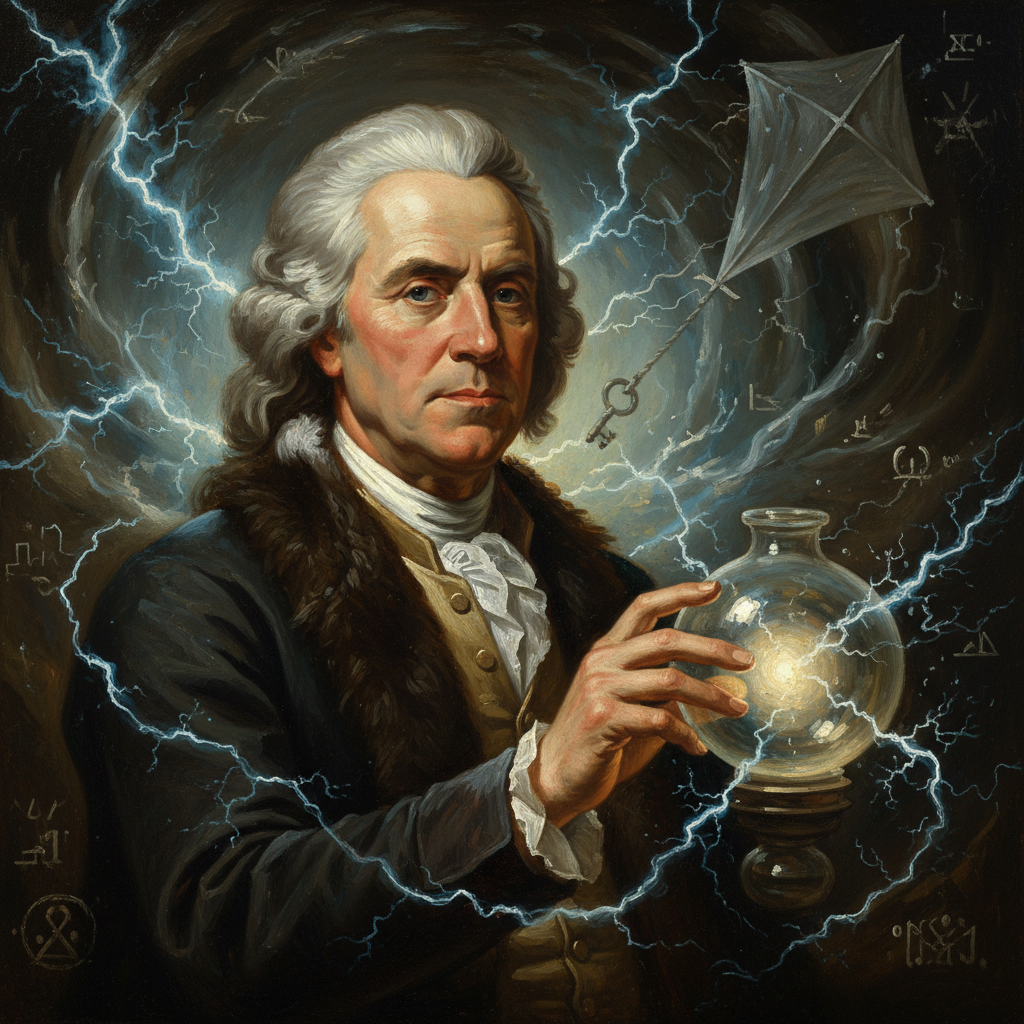
Franklin published this in Poor Richard's Almanack (1758), his beloved collection of practical wisdom for everyday Americans. As a printer, he knew one typesetting error could ruin an entire page. As a diplomat and founding father navigating a fragile new republic, he understood that political and military outcomes hinged on preparation and discipline. His core values — industry, frugality, attention to detail — made this cascade proverb a natural expression of his philosophy.
The era
In the 18th century, horses were the backbone of warfare, commerce, and communication — cavalry determined battle outcomes and supply chains were entirely animal-powered. Franklin wrote during the Seven Years' War, a global conflict where logistics failures genuinely decided the fates of empires. Readers understood viscerally that a broken horseshoe could strand a messenger or collapse a military advance. The cascade from nail to kingdom wasn't metaphor — it was lived military reality.
AI-generated insights based on extensive research and information for context. Factual errors? Email [email protected].