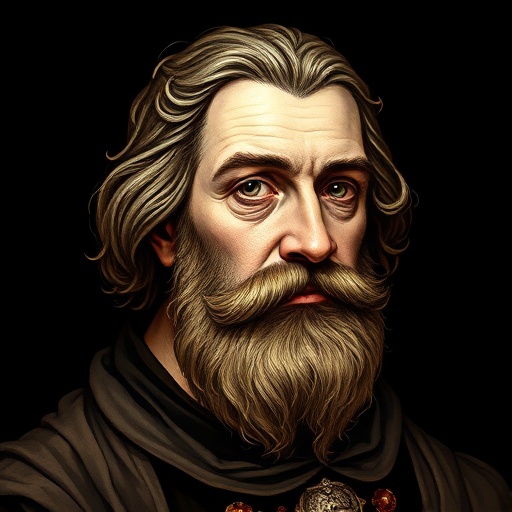
Geoffrey Chaucer — "He hadde a forhead reed as any glede, / With eyen narwe, and hoote as any goot."
He hadde a forhead reed as any glede, / With eyen narwe, and hoote as any goot.
He hadde a forhead reed as any glede, / With eyen narwe, and hoote as any goot.
Click any product to generate a realistic preview. Up to 3 at a time.
* Initial load can take up to 90 seconds — revising the preview in another color is nearly instant.
"A man shal fynde, that in his lyf, The gretteste joye is to have a wyf."
"He wolde make a good confessorie, / If a man had a soule, and that he were / A good man, and coude wel here / Confessiouns, and have a good memorie."
"And everich of us to lighten his herte, And of his tale anothere for to telle."
"he pricked her hard and deep, like one gone mad."
"For though the grettest clerkes han it sworen, That ther is no felicitee in mariage, Ne no felicitee but in his lyf, That lyveth out of swich servage."
English poet, civil servant, and the father of English literature; The Canterbury Tales (~1387-1400) is the founding text of English-language storytelling. Closely associated with Giovanni Boccaccio (his Italian predecessor; the Decameron preceded the Canterbury Tales by ~40 years). For an intellectual contrast, see John Wycliffe, English theologian and Lollard reform-movement leader — Wycliffe and Chaucer were near-contemporaries in the same English Christian world — Chaucer's Wife of Bath and Pardoner are the canonical literary defense of fleshly humanity against the Lollard moral austerity that would later become English Puritanism. Earthy storytelling vs proto-Protestant moralism.
Your cart is empty