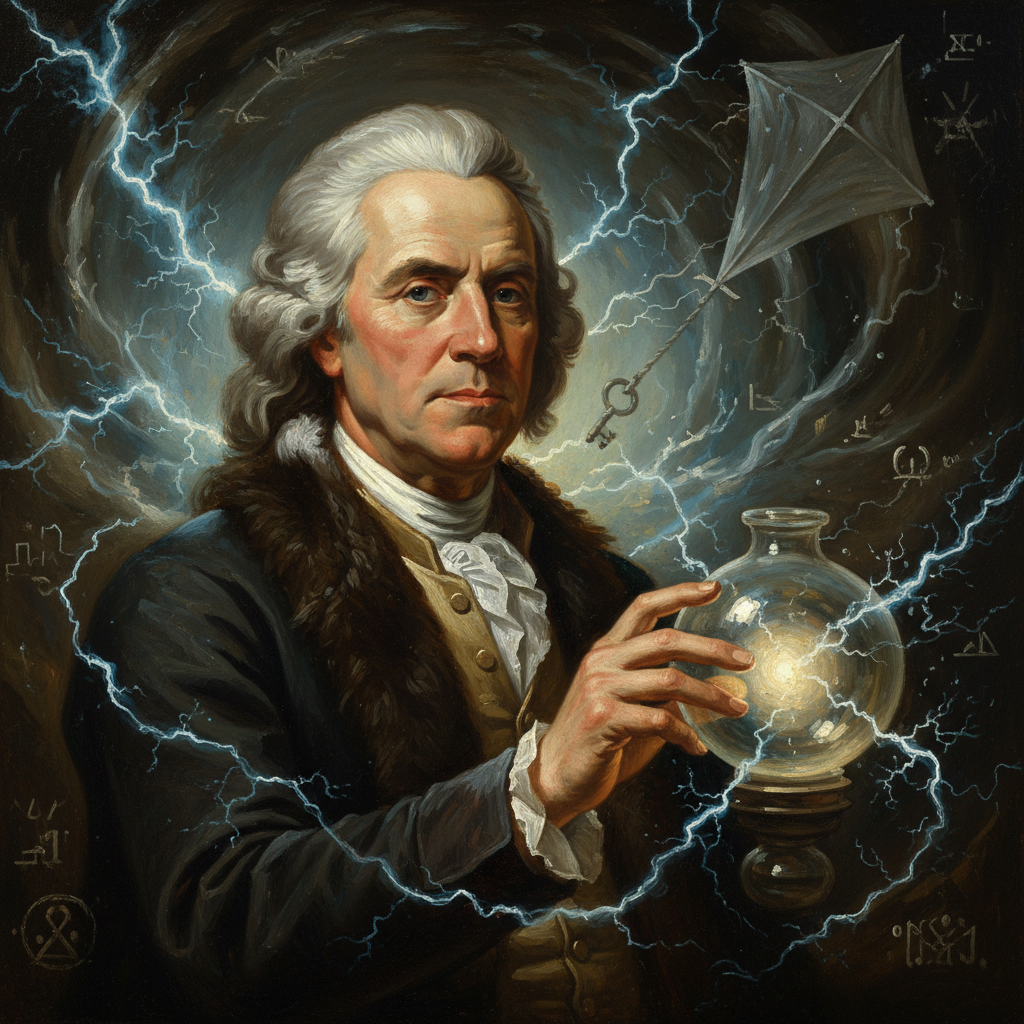
Benjamin Franklin — "He that best understands the world, best understands his own business."
He that best understands the world, best understands his own business.
He that best understands the world, best understands his own business.
Click any product to generate a realistic preview. Up to 3 at a time.
* Initial load can take up to 90 seconds — revising the preview in another color is nearly instant.
"Well done is better than well said."
"Little strokes fell great oaks."
"The borrower is servant to the lender and the debtor to the creditor."
"There are no gains without pains."
"Glass, China, and Reputation, are easily crack'd, and never well mended."
Polymath Founding Father, diplomat, and Poor Richard's Almanack author who helped draft the Declaration of Independence and the Constitution. Closely associated with John Adams (fellow Founder, Massachusetts statesman) and Thomas Jefferson (fellow Declaration drafter). For an intellectual contrast, see Thomas Hutchinson, last royal governor of colonial Massachusetts — Franklin leaked Hutchinson's loyalist correspondence to Boston in 1772 to inflame revolutionary sentiment — Hutchinson represented the colonial-aristocrat crown-loyalty that Franklin's revolution was organized to dismantle.
Found in 1 providers: grok
1 source checked
Broad knowledge of how the world works makes you better at your own specific affairs. Understanding systems, human nature, economics, and cause-and-effect beyond your immediate domain sharpens every decision within it. A merchant who understands politics makes shrewder trades. A craftsman who grasps market forces prices better. The wider your grasp of the world's workings, the more accurately you can anticipate consequences and act effectively in your own sphere.
Franklin embodied this as America's foremost polymath. His electricity experiments, Gulf Stream mapping, and meteorological work fed directly into practical inventions — the lightning rod, bifocals, the efficient stove. His diplomatic triumph in France depended on mastering French culture and Enlightenment politics. The same man who founded a library, a fire company, and a university understood that wide learning wasn't separate from practical success — it was the foundation of it.
The 18th-century Enlightenment held that reason and empirical observation unlocked universal truths with practical applications. Science, commerce, and statecraft were not yet siloed disciplines; educated men read across all of them. Colonial American merchants depended on understanding Atlantic trade routes, European wars, and shifting imperial policies to survive. Specialized ignorance was a liability, not a professional virtue. The ideal of the learned gentleman-citizen assumed that worldly breadth and personal effectiveness were inseparable.
AI-generated insights based on extensive research and information for context. Factual errors? Email [email protected].
Your cart is empty