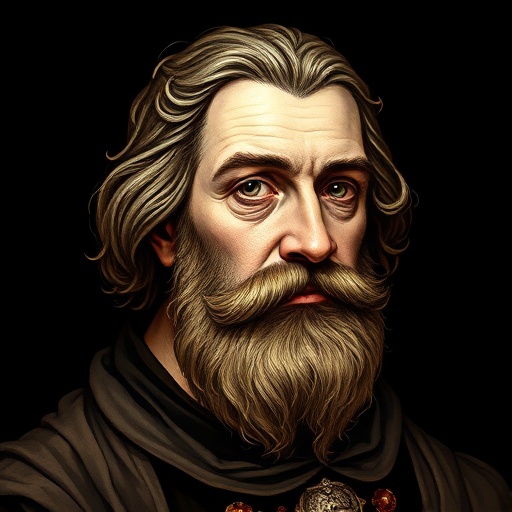
Geoffrey Chaucer — "His mouth as greet was as a greet forneys."
His mouth as greet was as a greet forneys.
His mouth as greet was as a greet forneys.
Click any product to generate a realistic preview. Up to 3 at a time.
* Initial load can take up to 90 seconds — revising the preview in another color is nearly instant.
"The wise man, though he be old and hoor, Yet wil he lerne, and evermore."
"For goddes sake, taak al in pacience Our lordes hestes, and his ordinaunce."
"For though the lyon be a beest, He hath a herte of gold, and that is al."
"The Firste Moevere of the cause above, Whan he first made the faire cheyne of love, Greet was theffect, and heigh was his entente."
"I grante it yow, I have noon other lyf, But if that I do feele my wyves knyf."
English poet, civil servant, and the father of English literature; The Canterbury Tales (~1387-1400) is the founding text of English-language storytelling. Closely associated with Giovanni Boccaccio (his Italian predecessor; the Decameron preceded the Canterbury Tales by ~40 years). For an intellectual contrast, see John Wycliffe, English theologian and Lollard reform-movement leader — Wycliffe and Chaucer were near-contemporaries in the same English Christian world — Chaucer's Wife of Bath and Pardoner are the canonical literary defense of fleshly humanity against the Lollard moral austerity that would later become English Puritanism. Earthy storytelling vs proto-Protestant moralism.
The Canterbury Tales, General Prologue (describing the Miller's large mouth)
Date: c. 1387-1400
GeneralFound in 1 providers: gemini
1 source checked
Your cart is empty