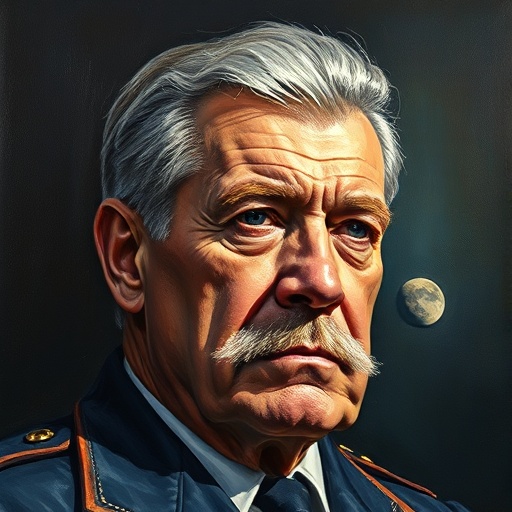
Wernher von Braun — "I always had a passion for rockets, even as a child."
I always had a passion for rockets, even as a child.
I always had a passion for rockets, even as a child.
Click any product to generate a realistic preview. Up to 3 at a time.
* Initial load can take up to 90 seconds — revising the preview in another color is nearly instant.
"It is not a question of whether we will go to Mars, but when."
"The universe is a vast and beautiful place."
"The working conditions there were absolutely horrible. I saw the Mittelwerk several times, once while these prisoners were blasting new tunnels in there and it was a pretty hellish environment. I'd ne…"
"I don't think there's any limit to what we can achieve in space."
"One cannot be timid when one works with liquid oxygen."
Found in 1 providers: grok
1 source checked
A lifelong, intrinsic drive toward a singular pursuit — rockets — that began before formal education or career pressures could shape it. Childhood fascination becomes the seed of transformative achievement. The simplicity underscores authenticity: genuine passion isn't learned or assigned, it's innate. Great work often flows from what captivated us long before anyone told us what was possible, practical, or socially acceptable to pursue.
Von Braun's claim is verifiable biography. Born in 1912, he read Hermann Oberth's rocketry writings as a teenager and joined Germany's Society for Space Travel at 18. That childhood fixation drove him through the V-2 program under Nazi Germany, surrender to U.S. forces, and ultimately to designing the Saturn V rocket that carried Apollo 11 to the Moon in 1969. His career is a straight line from boyhood obsession to the defining achievement of 20th-century spaceflight.
Von Braun's active years spanned the most consequential decades in rocket history. The V-2 became the world's first operational ballistic missile in 1944, redefining warfare. After the war, the Cold War space race — ignited by Sputnik in 1957 — turned rocketry into a superpower contest. His era saw rockets evolve from experimental curiosities into instruments of war, diplomacy, and exploration. The Apollo 11 Moon landing in 1969 marked the apex of the trajectory his childhood passion helped create.
AI-generated insights based on extensive research and information for context. Factual errors? Email [email protected].
Your cart is empty