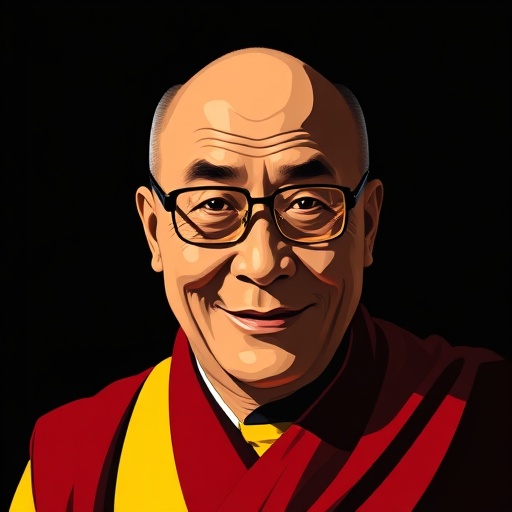
Dalai Lama (14th) — "I am not a politician. I am a spiritual leader. My main concern is the well-bein…"
I am not a politician. I am a spiritual leader. My main concern is the well-being of humanity.
I am not a politician. I am a spiritual leader. My main concern is the well-being of humanity.
Click any product to generate a realistic preview. Up to 3 at a time.
* Initial load can take up to 90 seconds — revising the preview in another color is nearly instant.
"Optimism is a wonderful quality, and it can be cultivated."
"I sometimes call myself a 'troublemaker' because I like to challenge people's assumptions."
"Sometimes I think I am a Communist."
"If a new Dalai Lama comes, that female must be attractive. Otherwise, not much use."
"I am open to guidance from the universe, and I don’t let my limited perception of reality get in the way."
Found in 1 providers: grok
1 source checked
The speaker draws a firm line between political ambition and spiritual purpose. Rather than pursuing power, national interests, or partisan influence, they claim their core drive is universal human welfare. In modern terms: this is someone refusing to be reduced to a political actor while asserting a higher calling — improving conditions for all people regardless of nationality, religion, or background. The concern isn't strategy or ideology; it's human flourishing itself.
Tenzin Gyatso became Dalai Lama at age fifteen and fled Tibet in 1959 after China's military occupation, making him a stateless exile simultaneously cast as both spiritual and political figurehead. He formally relinquished political leadership of the Tibetan government-in-exile in 2011, deliberately separating the roles. His 1989 Nobel Peace Prize, decades of interfaith dialogue, and compassion-centered philosophy consistently prioritize universal welfare over Tibetan political ambitions, embodying exactly this distinction.
The contemporary era has seen rising nationalism, the weaponization of faith for political ends, and religious extremism fueling global conflict. As crises — climate change, mass displacement, pandemics — demand cross-border cooperation, leaders blurring spirituality and politics have deepened division. The Dalai Lama's insistence on separating these roles pushes back against theocratic nationalism and resonates in an era where interfaith understanding and shared human dignity have become urgent alternatives to tribal and ideological conflict.
AI-generated insights based on extensive research and information for context. Factual errors? Email [email protected].
Your cart is empty