What it means
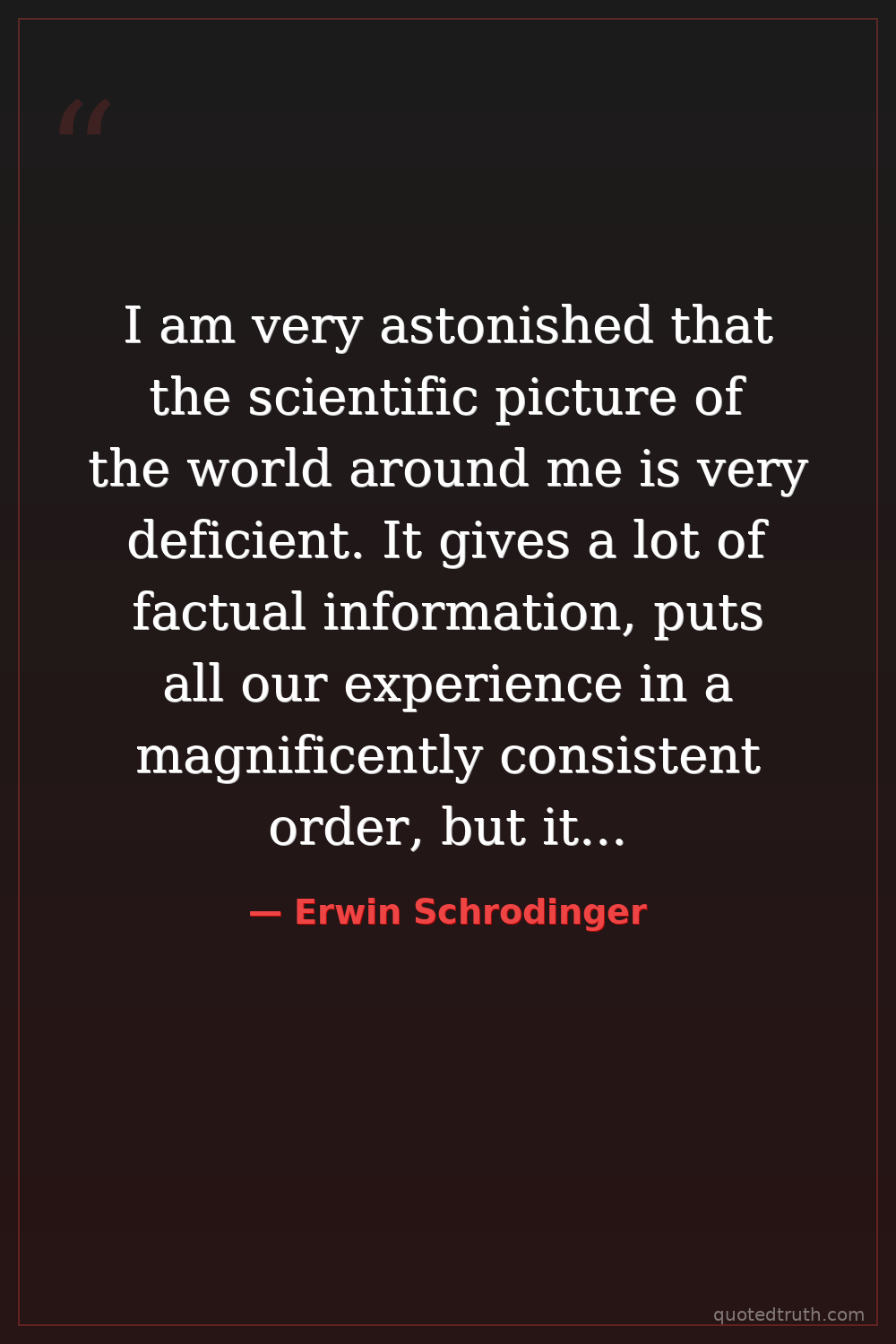
Science excels at organizing facts and predicting phenomena, but it says nothing about subjective experience — the redness of red, the bitterness of taste, pleasure, pain, beauty, morality, or the divine. The scientific framework, however powerful, is structurally blind to the inner life of the observer. This is not a failure of science so much as a boundary it cannot cross by design.
Relevance to Erwin Schrodinger
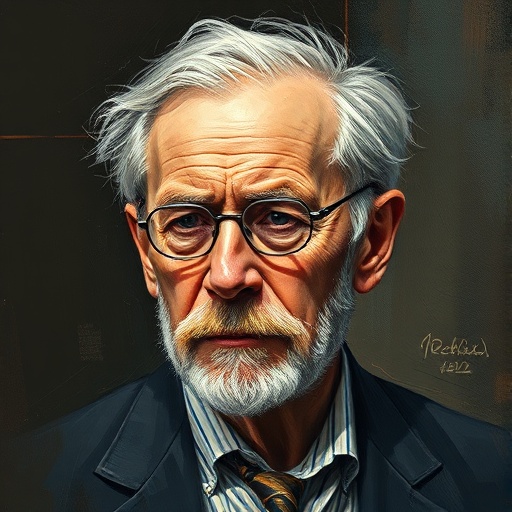
Schrödinger, who formulated wave mechanics and the famous cat paradox, spent his later career explicitly wrestling with the gap between physics and consciousness. His book 'What is Life?' and essays in 'Mind and Matter' show a physicist deeply troubled that quantum mechanics, which he helped build, still could not account for the mind that perceives it — a tension he felt personally and philosophically.
The era
Writing in the mid-20th century, Schrödinger lived through the triumph of quantum mechanics and relativity, which seemed to explain nearly everything physical. Yet this same era saw existentialism and phenomenology rise in response to science's silence on meaning. Post-WWII disillusionment made the question urgent: if science could build atomic bombs but not explain suffering or beauty, what were its limits?
AI-generated insights based on extensive research and information for context. Factual errors? Email [email protected].