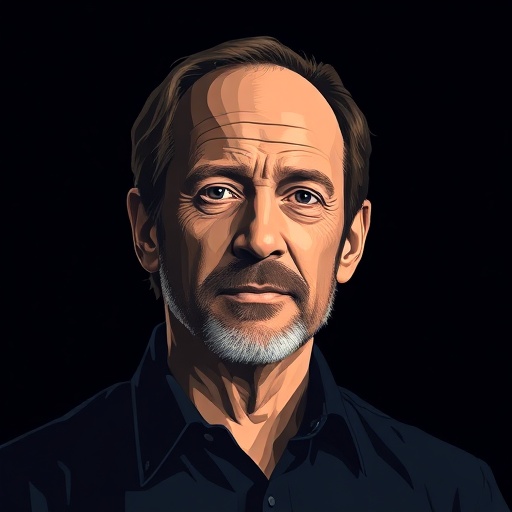
Tim Berners-Lee — "I believe that the web can help to create a more just and equitable world."
I believe that the web can help to create a more just and equitable world.
I believe that the web can help to create a more just and equitable world.
Click any product to generate a realistic preview. Up to 3 at a time.
* Initial load can take up to 90 seconds — revising the preview in another color is nearly instant.
"Governments must treat the internet as a basic utility—like water."
"I'm still dreaming of a web where everything is linked, where all information is connected."
"The web is a powerful force for good, but it can also be a powerful force for evil. We need to make sure it's used for good."
"The web is a tool for democracy, but it can also be used for dictatorship."
"The internet should be free from censorship."
British computer scientist who invented the World Wide Web at CERN in 1989 and founded the W3C, championing open web standards. Closely associated with Vint Cerf (TCP/IP co-creator and 'father of the internet') and Marc Andreessen (Mosaic browser creator and Netscape co-founder). For an intellectual contrast, see Mark Zuckerberg, Facebook (Meta) founder — Zuckerberg's walled-garden Facebook is the canonical contemporary opposite of Berners-Lee's open-web vision; Berners-Lee's Solid project and 'recapture the web' essays are explicitly written as a rebuttal to the platform-monopoly model Facebook pioneered.
Found in 1 providers: grok
1 source checked
The web has power to level playing fields — giving people everywhere access to information, education, economic opportunity, and a voice regardless of where they live or their economic status. Open access to knowledge breaks down barriers that geography, class, and wealth once made permanent. A truly open internet doesn't just connect people; it can redistribute power away from gatekeepers and toward individuals and communities previously excluded.
Berners-Lee invented the web at CERN in 1989 and deliberately kept it patent-free so anyone could use it — a founding act of radical openness. He later established the World Wide Web Consortium to protect open standards, then founded the Web Foundation in 2009 to fight for universal access and digital rights. His entire career has been structured around the conviction that concentrating web control harms society and democracy.
By the 2010s and 2020s, early utopian promises about the internet were colliding with hard realities: surveillance capitalism, algorithmic misinformation, widening digital divides, and Big Tech monopolization. Berners-Lee himself declared the web "dysfunctional" in 2018 and launched the Contract for the Web initiative. His belief in the web's equalizing potential became both a rallying cry and an urgent call to reform the system he had built.
AI-generated insights based on extensive research and information for context. Factual errors? Email [email protected].
Your cart is empty