What it means
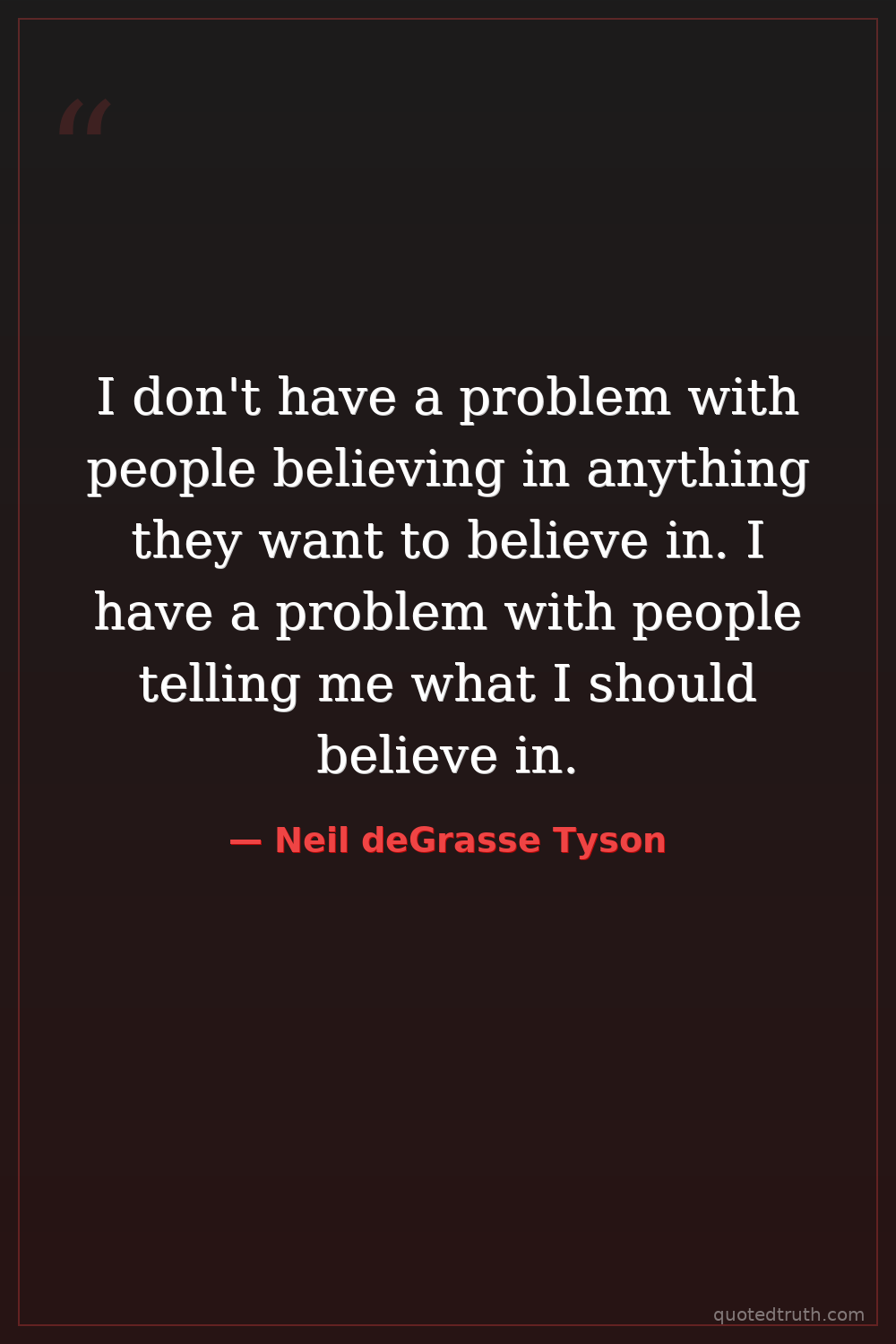
Personal belief is a private right that deserves respect, but no one holds authority to dictate another's convictions. The speaker separates tolerance from submission: you can believe whatever you choose, but that freedom ends when you attempt to impose your worldview on others. Intellectual autonomy matters as much as religious or ideological freedom itself.
Relevance to Neil deGrasse Tyson
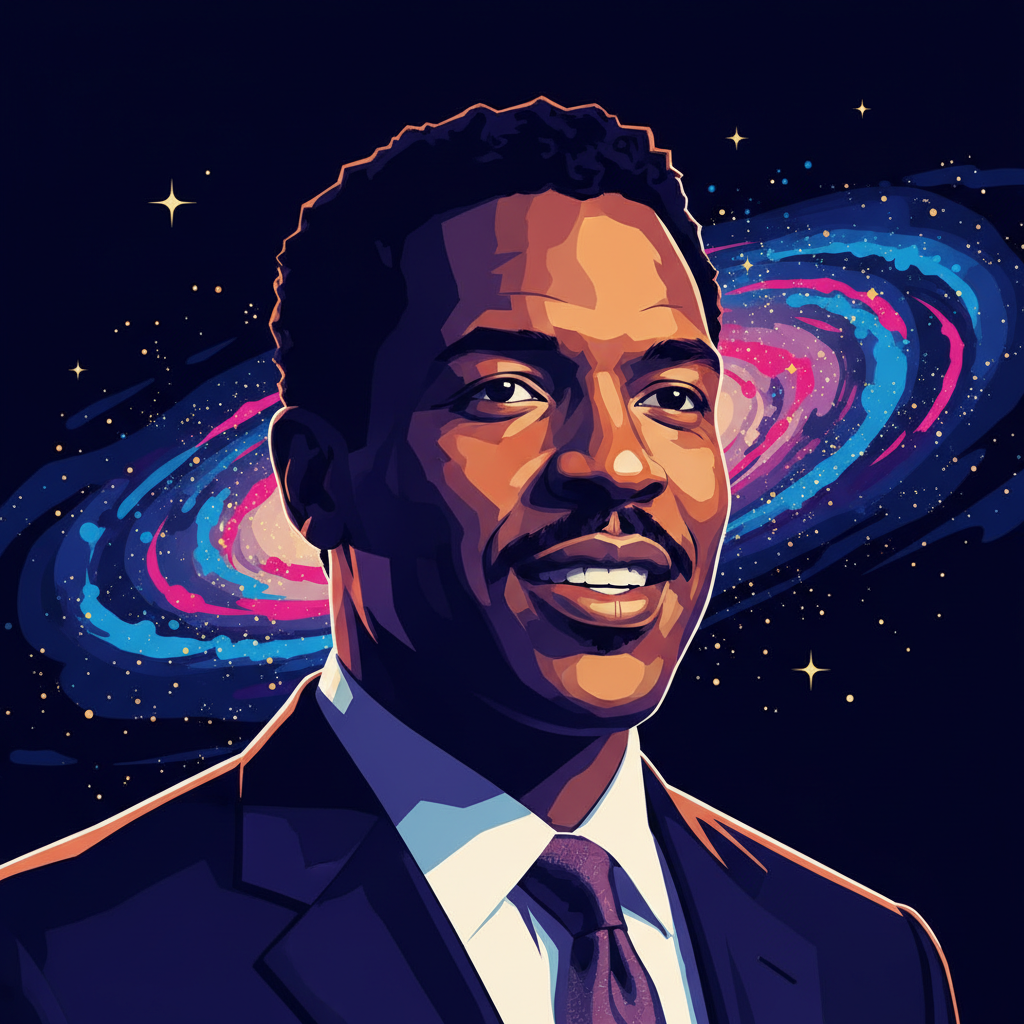
Tyson frequently navigates tension between science and religion as a public science communicator. He has repeatedly refused to label himself atheist, insisting on intellectual independence. His career at the American Museum of Natural History and as host of Cosmos puts him in constant dialogue with audiences holding diverse beliefs, making this boundary between tolerance and imposition personally lived.
The era
Tyson rose to prominence during the 2000s-2020s culture wars over evolution, climate science, and vaccine skepticism. Science communicators faced organized pressure campaigns from religious and political groups demanding alignment with non-empirical worldviews. This quote reflects a broader societal negotiation between pluralism and epistemic authority during an era of intense ideological polarization and misinformation proliferation.
AI-generated insights based on extensive research and information for context. Factual errors? Email [email protected].