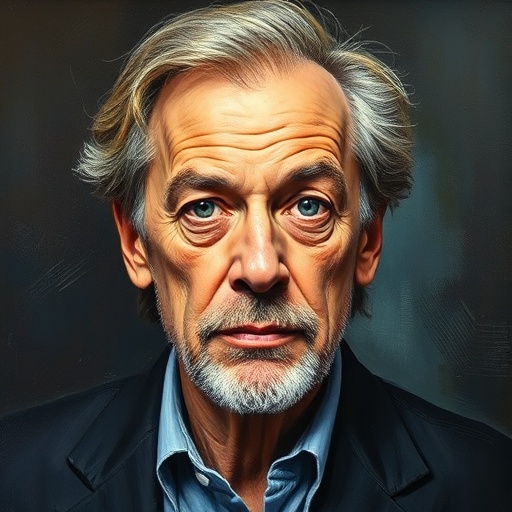
Richard Feynman — "I don't like to be called a genius. I just like to think."
I don't like to be called a genius. I just like to think.
I don't like to be called a genius. I just like to think.
Click any product to generate a realistic preview. Up to 3 at a time.
* Initial load can take up to 90 seconds — revising the preview in another color is nearly instant.
"I have often thought that if there is any hell, it must be the place where there are no questions, only answers."
"When we know how to do something, we don't call it research anymore."
"I would like to add a third possibility, that it might be that, when we die, we just die, and that's the end of it."
"I just want to understand the world, and I find that the best way to do that is to ask a lot of questions."
"The imagination of nature is far, far greater than the imagination of man."
American theoretical physicist who shared the 1965 Nobel for QED, developed Feynman diagrams, and wrote the Feynman Lectures on Physics. Closely associated with Julian Schwinger (co-Nobelist for QED) and Murray Gell-Mann (Caltech rival and Eightfold-Way physicist). For an intellectual contrast, see Deepak Chopra, physician and quantum-mysticism author — Feynman's Caltech 'cargo cult science' commencement address is the precise template for what he saw as misuse of physics terminology — Chopra-style appropriation of quantum vocabulary for metaphysical claims is the canonical example of what Feynman called 'fooling yourself'.
Found in 1 providers: grok
1 source checked
This quote pushes back against the idea that intelligence is a fixed gift some people simply possess. Feynman is saying that what looks like brilliance from the outside is actually deliberate, active thinking — curiosity pursued seriously. It's a democratizing claim: the work of reasoning matters more than any label or innate talent society assigns to someone.
Feynman was famous for attacking problems from first principles, rebuilding physics from scratch in his own mind. He taught himself calculus as a teenager, cracked safes at Los Alamos for fun, and rebuilt quantum electrodynamics visually through Feynman diagrams. He distrusted authority and prestige intensely, famously refusing honorary titles and dismissing pompous academic language throughout his career.
Feynman's peak years spanned the Cold War nuclear-scientific complex, where physicists were lionized as national heroes after the Manhattan Project. Scientists became cultural icons — almost mythologized. In that climate, being called a genius carried enormous social weight. Feynman's rejection of the label was a deliberate counter to the celebrity-scientist culture that elevated mystique over methodical, honest intellectual work.
AI-generated insights based on extensive research and information for context. Factual errors? Email [email protected].
Your cart is empty