What it means
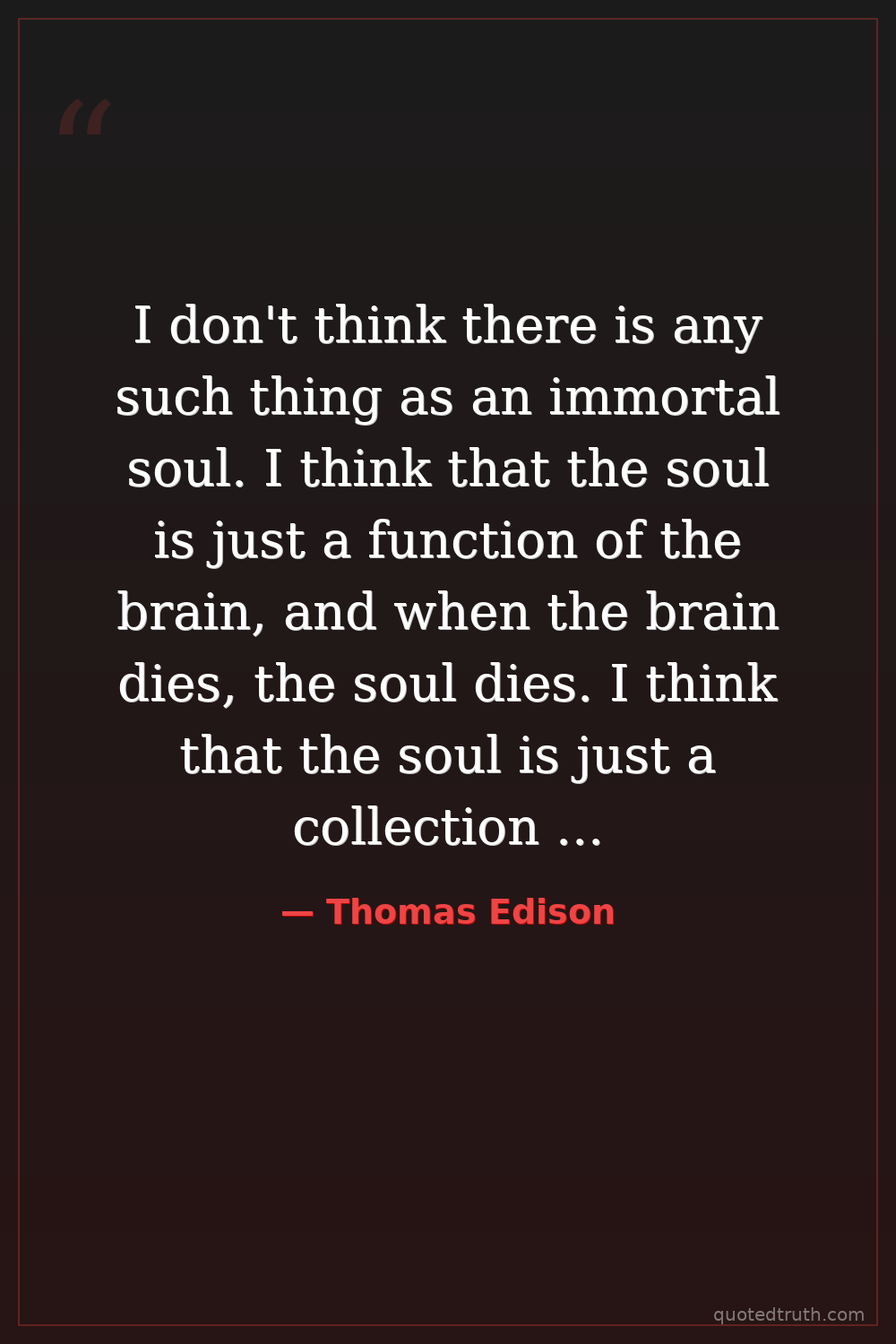
The speaker rejects the idea of a soul that survives death. Instead, the soul is described as something the brain produces, a byproduct of neural activity made up of stored memories and lived experiences. When the brain stops working, that inner self stops existing too. There is no separate spiritual essence that continues on, only biology generating what feels like identity while the body is alive.
Relevance to Thomas Edison
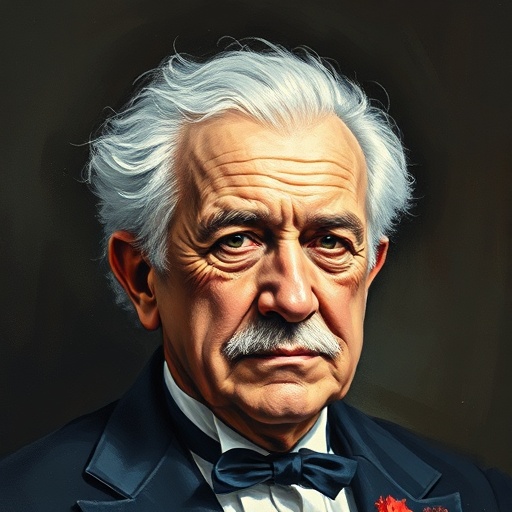
Edison was a relentless empiricist who trusted only what he could measure, test, and patent. He ran over 10,000 experiments on the light bulb filament and treated invention as methodical problem-solving, not inspiration. His materialist view of the soul fits a man who reduced phenomena to mechanism, from sound waves on tinfoil to electricity in carbon. He famously called genius 99% perspiration, dismissing mystical explanations for human capability.
The era
Edison lived during the late 19th and early 20th centuries, when Darwin's evolution, Pasteur's germ theory, and industrial science were dismantling religious explanations for life. Spiritualism and seances were popular, yet scientists increasingly framed mind as a product of brain tissue. Edison himself reportedly tinkered with a 'spirit phone' while publicly doubting afterlife claims, reflecting a culture torn between traditional faith and the rising authority of laboratory materialism.
AI-generated insights based on extensive research and information for context. Factual errors? Email [email protected].