What it means
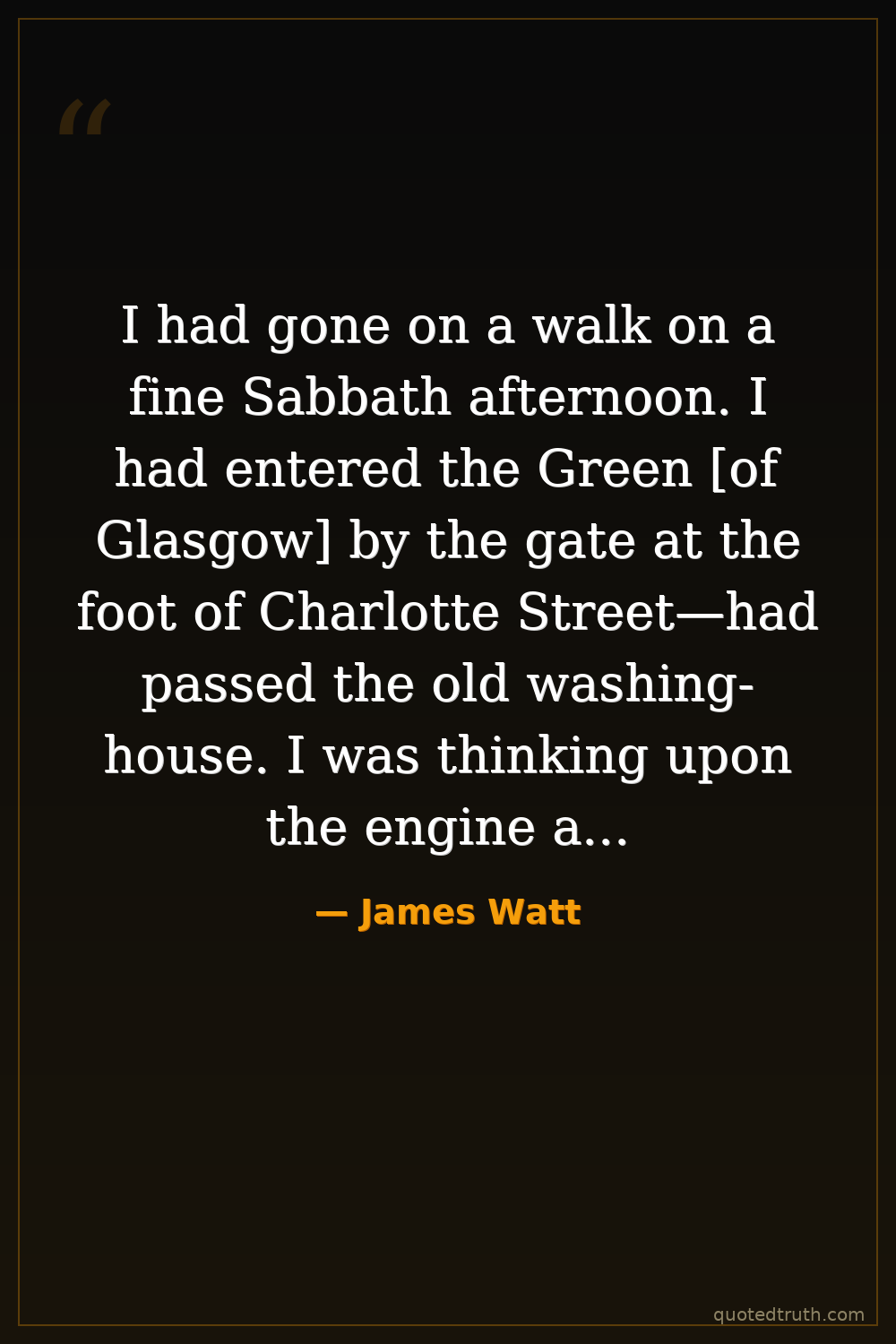
Watt is recounting the exact moment his breakthrough came during a Sunday walk. He realized steam, being elastic, naturally rushes toward lower pressure—so if a separate cold vessel were connected to the hot cylinder, steam would condense there, leaving the cylinder perpetually hot. The separate condenser was born. Steam seeks a vacuum; condensing it elsewhere eliminates the massive energy wasted in Newcomen's engine, which cooled and reheated its single cylinder every stroke.
Relevance to James Watt
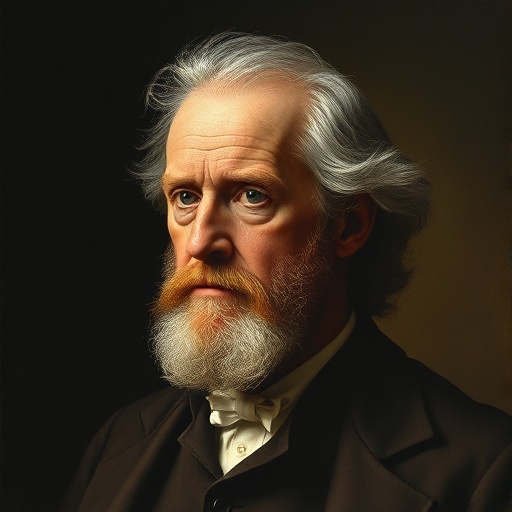
Watt was a University of Glasgow instrument maker who in 1763 was handed a broken Newcomen engine model to repair—an encounter that consumed him for two years. The Glasgow Green walk of 1765 is his documented eureka moment. His defining patent (1769) and transformative Boulton & Watt partnership both trace to this instant. Watt's character was relentless deliberate obsession: he solved problems through sustained mental focus, carrying engineering challenges on long solitary walks.
The era
Newcomen's atmospheric engine had dominated mine drainage since 1712 but consumed enormous fuel—its cylinder was alternately heated with steam then doused with cold water to create a vacuum, every stroke. Britain's coal mines were flooding deeper as shallow seams exhausted, making better pumping economically urgent. The Scottish Enlightenment linked rational inquiry to practical improvement. Watt's insight arrived just before industrialization accelerated; his separate condenser quadrupled engine efficiency and ignited the manufacturing revolution that reshaped the Western world.
AI-generated insights based on extensive research and information for context. Factual errors? Email [email protected].