What it means
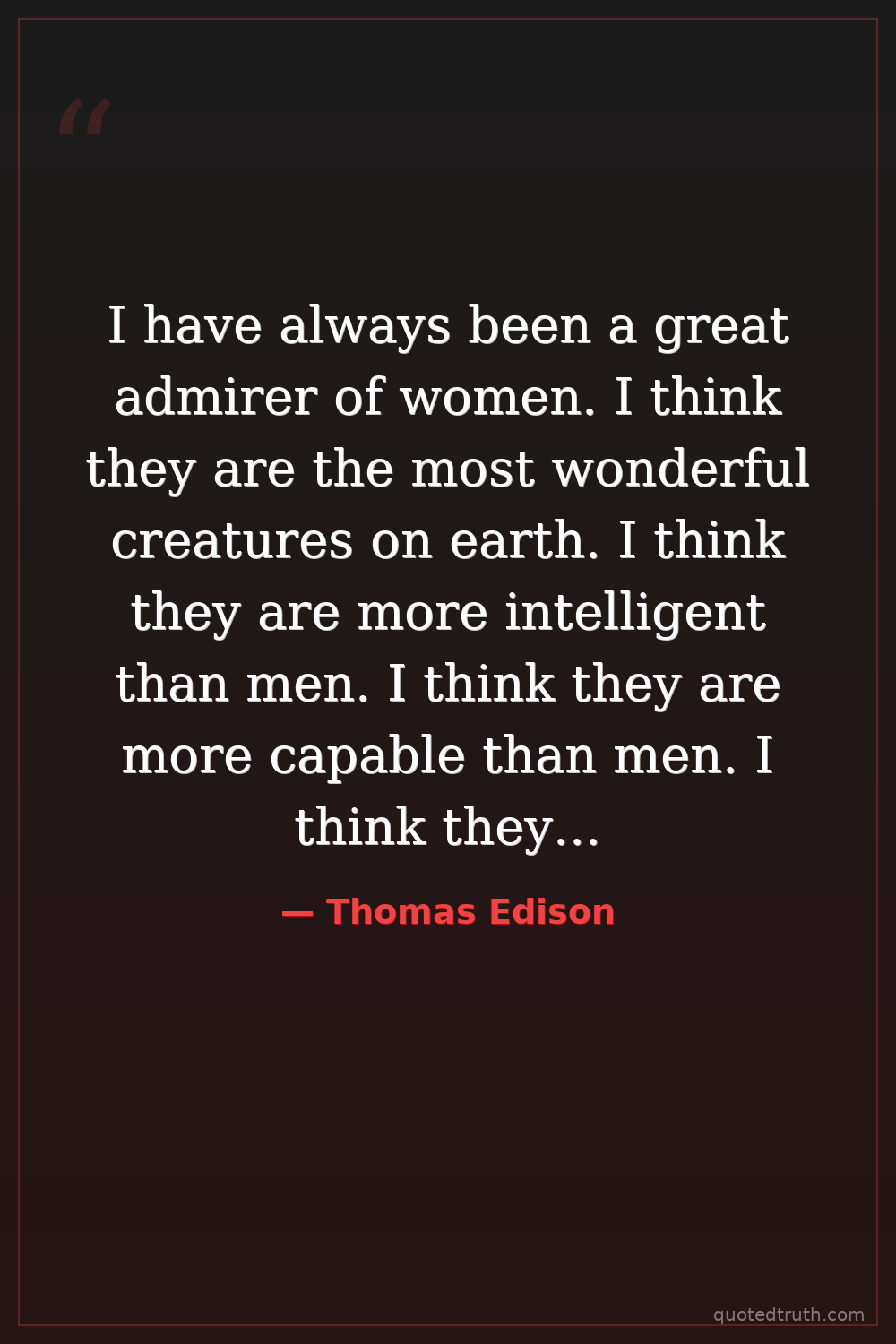
Edison declares straightforward admiration for women, arguing they surpass men in intelligence, capability, and practicality. He frames women not as decorative or secondary but as genuinely superior in the traits that matter for getting things done. It's a blunt endorsement of female competence, stacking four escalating claims to make the point impossible to soften or read as mere flattery toward the fairer sex.
Relevance to Thomas Edison
Edison ran a laboratory empire at Menlo Park and West Orange, managing hundreds of staff and relying heavily on his wives Mary Stilwell and Mina Miller for domestic and business stability. He hired women as researchers and clerks when most industrialists would not, and pushed his daughters toward education. Coming from a relentless pragmatist who valued results over pedigree, praising women specifically for practicality reflects how he actually judged people at his bench.
The era
Edison spoke during the late-nineteenth and early-twentieth century suffrage fight, when American women still could not vote federally until 1920 and were largely barred from professions, patents, and higher education. Factories were hiring women cheaply, Seneca Falls was within living memory, and figures like Susan B. Anthony were agitating nationally. A famous male inventor publicly calling women smarter and more capable than men cut against prevailing Victorian assumptions about female intellect.
AI-generated insights based on extensive research and information for context. Factual errors? Email [email protected].