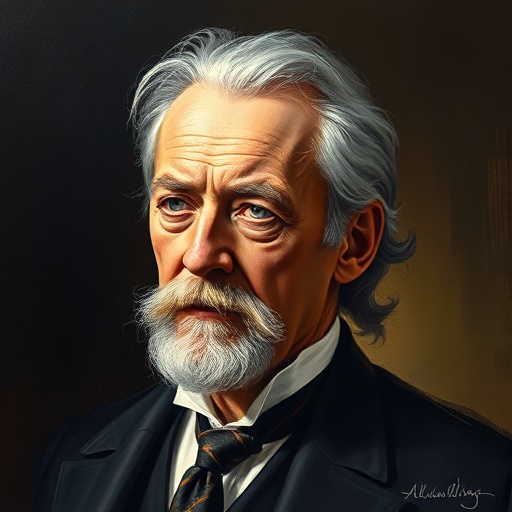
Alexander Fleming — "I have always been interested in the effect of one microbe on another."
I have always been interested in the effect of one microbe on another.
I have always been interested in the effect of one microbe on another.
Click any product to generate a realistic preview. Up to 3 at a time.
* Initial load can take up to 90 seconds — revising the preview in another color is nearly instant.
"The public will not understand the dangers of using penicillin indiscriminately."
"It is a matter of great satisfaction to see penicillin saving so many lives."
"The mold was a lucky accident, but the observation was not."
"The early days of penicillin were full of disappointments, but we never gave up."
"It is not wise to be too dogmatic in science. One must always be prepared to change one's mind."
Found in 1 providers: grok
1 source checked
Fleming describes his lifelong fascination with how microorganisms interact and compete with each other. Rather than studying microbes in isolation, he was drawn to their ecological relationships — how one species suppresses or alters another. This perspective, focused on microbial interference, is exactly the lens that made him notice the antibacterial zone around a contaminating Penicillium mold on a neglected petri dish in 1928.
Fleming spent his career at St. Mary's Hospital London studying bacterial cultures. His 1928 penicillin discovery happened precisely because of this interest: a contaminating Penicillium mold was killing surrounding Staphylococcus bacteria — one microbe visibly suppressing another. Earlier, in 1921, he had discovered lysozyme when nasal mucus inhibited bacterial growth. Both breakthroughs emerged from the same attentiveness to microbial competition that this quote describes, making it autobiographically accurate.
Fleming worked during the early 20th century, when bacterial infections — wound sepsis, pneumonia, scarlet fever — were routinely fatal. Antibiotics didn't exist; physicians relied on antiseptics and patient immunity. WWI exposed the catastrophic toll of infected battlefield wounds. Microbiologists were desperately seeking ways to combat pathogens. Against this backdrop, interest in natural microbial antagonism — one organism killing another — offered a scientifically grounded path toward treatments that chemicals alone couldn't provide.
AI-generated insights based on extensive research and information for context. Factual errors? Email [email protected].
Your cart is empty