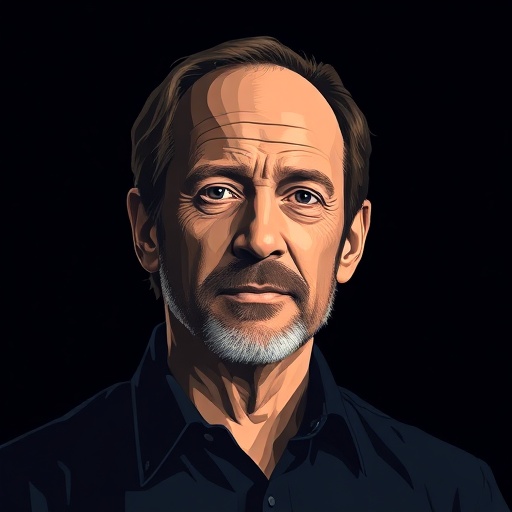
Tim Berners-Lee — "I never thought the web would grow to be this big. It's amazing."
I never thought the web would grow to be this big. It's amazing.
I never thought the web would grow to be this big. It's amazing.
Click any product to generate a realistic preview. Up to 3 at a time.
* Initial load can take up to 90 seconds — revising the preview in another color is nearly instant.
"The web is still young. It's still evolving. We have to shape its future."
"I was really annoyed when I found out people were using the web to look at pornography."
"I’m not a fan of the way some companies use the web to manipulate people."
"The web is not a privilege, it is a right."
"The web is a mirror of society."
British computer scientist who invented the World Wide Web at CERN in 1989 and founded the W3C, championing open web standards. Closely associated with Vint Cerf (TCP/IP co-creator and 'father of the internet') and Marc Andreessen (Mosaic browser creator and Netscape co-founder). For an intellectual contrast, see Mark Zuckerberg, Facebook (Meta) founder — Zuckerberg's walled-garden Facebook is the canonical contemporary opposite of Berners-Lee's open-web vision; Berners-Lee's Solid project and 'recapture the web' essays are explicitly written as a rebuttal to the platform-monopoly model Facebook pioneered.
Found in 1 providers: grok
1 source checked
Berners-Lee admits genuine surprise at how enormous the web has become. When he built it, he saw a practical tool for sharing documents among researchers, not a global platform connecting billions of people, powering commerce, communication, entertainment, and politics. The statement mixes humility with wonder: even the creator of a transformative technology cannot predict its ultimate scale or reach. He is acknowledging that the web outgrew his original vision in ways he finds remarkable rather than taking credit for its expansion.
Berners-Lee invented the World Wide Web in 1989 at CERN as a way for physicists to share research documents, writing the first browser, server, and HTTP protocol himself. He deliberately released the technology royalty-free in 1993, a decision that enabled its explosive growth. His humility here reflects his character: he has consistently credited users and open standards rather than himself, and his later work through W3C and the Solid project shows ongoing concern about stewarding what he started.
Berners-Lee's invention emerged as the Cold War ended and personal computing reached homes. The 1990s dot-com boom, the rise of Google, social media in the 2000s, and smartphones all built on his foundation. By the time he made such reflections, the web hosted billions of users, trillions of pages, and had reshaped journalism, retail, and politics. His era uniquely spans from a web of a few hundred sites to one encompassing most of human knowledge and commerce within a single working lifetime.
AI-generated insights based on extensive research and information for context. Factual errors? Email [email protected].
Your cart is empty