What it means
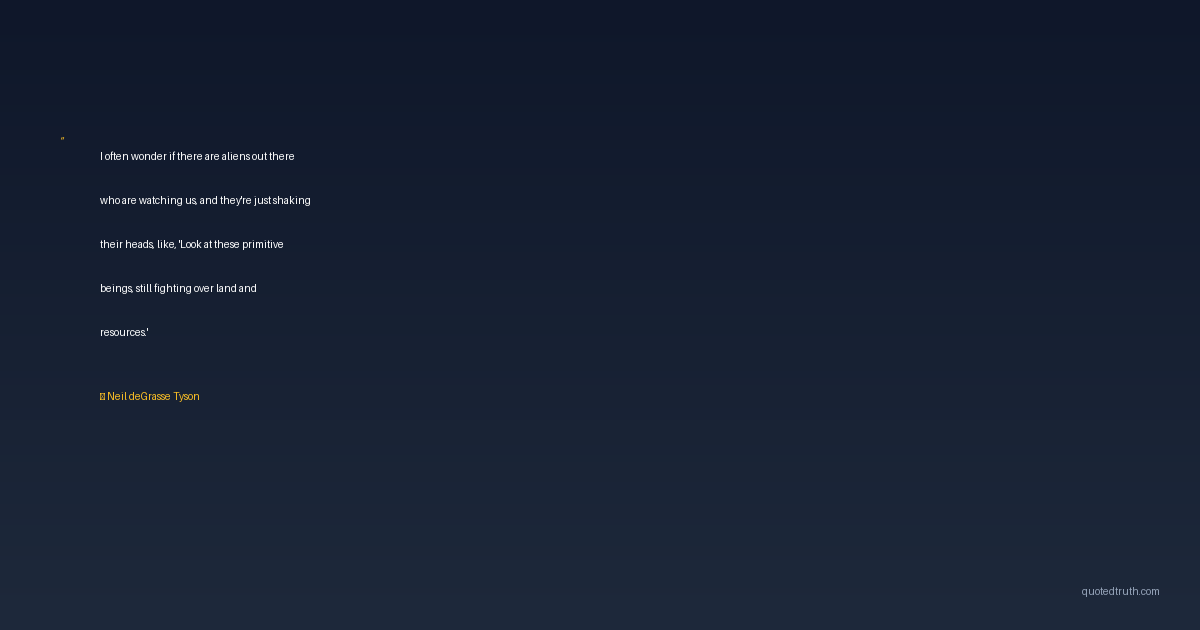
By imagining advanced alien civilizations watching humanity, Tyson frames our territorial wars and resource conflicts as embarrassingly backward — things a truly evolved species would have outgrown. The alien-observer device works as a mirror: if outsiders could watch us, our divisions over borders and commodities would look primitive against the scale of the cosmos. It invites us to measure ourselves not against rival nations, but against what intelligent life could actually become.
Relevance to Neil deGrasse Tyson
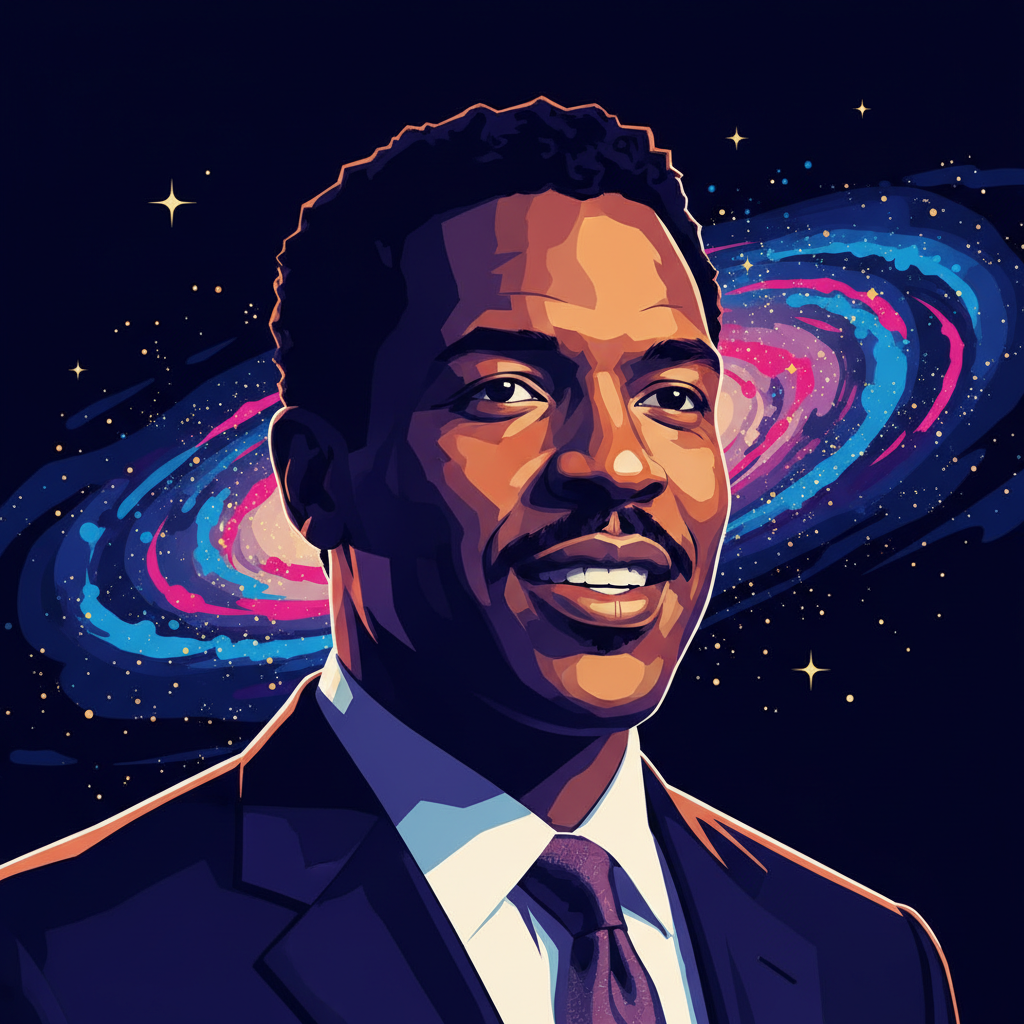
Tyson, director of the Hayden Planetarium and host of StarTalk Radio, built his public identity around the 'cosmic perspective' — using astronomical scale to deflate human arrogance. His books and lectures consistently argue that understanding the universe should humble and unite us. As a Black scientist who navigated real racial barriers in academia, he understands tribalism's concrete costs firsthand, giving this alien-observer thought experiment genuine moral weight beyond clever wit.
The era
Tyson's career spans resurging nationalism, wars over territory and oil in Iraq, Afghanistan, Syria, and Ukraine, plus mainstream climate change denial — humanity visibly repeating ancient tribal patterns. Simultaneously, the Kepler telescope (2009) and James Webb Space Telescope (2021) discovered thousands of exoplanets, placing alien life firmly in scientific conversation. The juxtaposition of a universe potentially teeming with civilizations while Earth's nations still fight over borders makes the observation especially cutting.
AI-generated insights based on extensive research and information for context. Factual errors? Email [email protected].