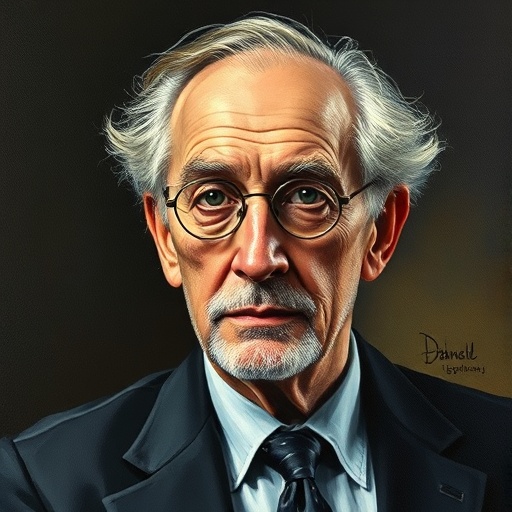
Francis Crick — "I think it's important to be skeptical of everything."
I think it's important to be skeptical of everything.
I think it's important to be skeptical of everything.
Click any product to generate a realistic preview. Up to 3 at a time.
* Initial load can take up to 90 seconds — revising the preview in another color is nearly instant.
"If you want to understand life, you have to understand DNA."
"We were searching for a structure so simple and beautiful that it had to be true."
"The origin of life is a scientific problem."
"It is notoriously difficult to get rid of a really bad idea."
"The Christian believer is like a tenant who is about to sign a lease on a flat when someone tells him that the owner of the flat does not exist."
Found in 1 providers: grok
1 source checked
Skepticism means questioning assumptions, claims, and accepted wisdom rather than taking them on faith. It isn't cynicism — it's a disciplined refusal to accept ideas without scrutiny. Demanding evidence before believing something protects against false beliefs, groupthink, and intellectual stagnation. The principle holds that even well-established ideas deserve ongoing examination, because truth emerges from rigorous testing, not from inherited authority or popular consensus.
Francis Crick was not a trained biologist — he started in physics, and his outsider skepticism of biology's prevailing assumptions helped him and Watson challenge the scientific establishment. He famously doubted early DNA models including Pauling's triple helix. Later, he rejected conventional neuroscience frameworks, pursuing consciousness research. His Catholic upbringing gave way to declared atheism, showing his skepticism extended well beyond science.
Crick's most productive decades spanned the 1950s–1980s, when molecular biology was overturning centuries of received wisdom about life itself. Cold War competition pressured scientists toward conformity and national prestige. The authority of Cambridge, the MRC, and figures like Linus Pauling created intellectual hierarchy that rewarded deference. Simultaneously, organized religion remained dominant in Britain and America. Crick's skepticism was a deliberate stance against all such inherited authority.
AI-generated insights based on extensive research and information for context. Factual errors? Email [email protected].
Your cart is empty