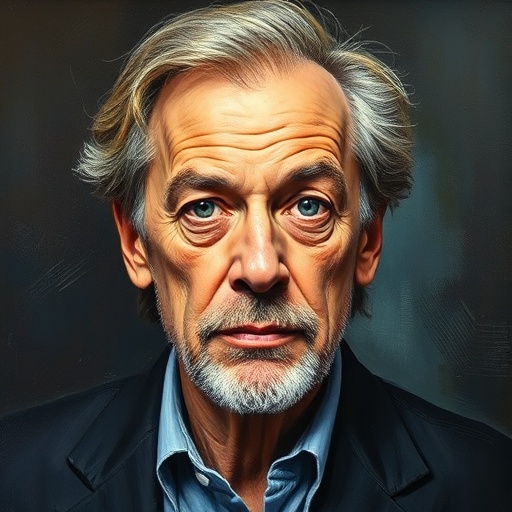
Richard Feynman — "I think it's much more interesting to live with not knowing than to have answers…"
I think it's much more interesting to live with not knowing than to have answers that might be wrong.
I think it's much more interesting to live with not knowing than to have answers that might be wrong.
Click any product to generate a realistic preview. Up to 3 at a time.
* Initial load can take up to 90 seconds — revising the preview in another color is nearly instant.
"I don't care what you think. I care what's true."
"I don't like to be told what to do."
"I actually did not have to learn a thing for my thesis. It was all stuff I already knew."
"I would often go to these conferences where they would talk about the ultimate theory, and I would always say, 'What's the ultimate experiment?'"
"It is not the job of the scientist to tell people what to do, but to provide them with the knowledge to make their own decisions."
American theoretical physicist who shared the 1965 Nobel for QED, developed Feynman diagrams, and wrote the Feynman Lectures on Physics. Closely associated with Julian Schwinger (co-Nobelist for QED) and Murray Gell-Mann (Caltech rival and Eightfold-Way physicist). For an intellectual contrast, see Deepak Chopra, physician and quantum-mysticism author — Feynman's Caltech 'cargo cult science' commencement address is the precise template for what he saw as misuse of physics terminology — Chopra-style appropriation of quantum vocabulary for metaphysical claims is the canonical example of what Feynman called 'fooling yourself'.
Found in 2 providers: grok,deepseek
2 sources checked
Intellectual honesty demands tolerating uncertainty rather than clinging to false certainty. Pretending to know something you don't is worse than admitting ignorance. Genuine curiosity thrives in open questions, not premature conclusions. Accepting 'I don't know' keeps your mind receptive and your reasoning honest, while wrong answers masquerading as truth close off further inquiry and corrupt understanding.
Feynman built quantum electrodynamics by dismantling prior assumptions and following evidence into radical uncertainty. He famously distrusted authority and pseudo-knowledge, exposing NASA's Challenger cover-up by demanding honest admission of risk. His Caltech lectures celebrated wonder over dogma. Safecracking, bongo drums, strip clubs — Feynman explored everything with curious openness rather than performed expertise.
Post-WWII physics produced the atomic bomb and Cold War ideology, pressuring scientists toward confident, useful answers for governments and militaries. The 1950s–70s saw scientism rise — public trust in expert pronouncements as absolute truth. Feynman's insistence on intellectual humility was a direct counter to both political certainty and the era's naive faith in science as an oracle of definitive answers.
AI-generated insights based on extensive research and information for context. Factual errors? Email [email protected].
Your cart is empty