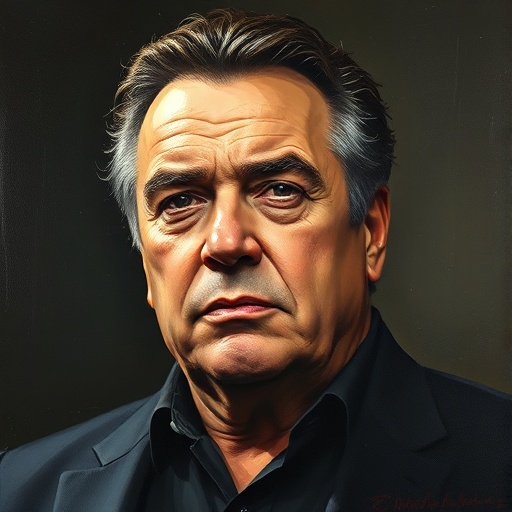
Marlon Brando — "I think that I'm a good actor, but I'm not a great actor."
I think that I'm a good actor, but I'm not a great actor.
I think that I'm a good actor, but I'm not a great actor.
Click any product to generate a realistic preview. Up to 3 at a time.
* Initial load can take up to 90 seconds — revising the preview in another color is nearly instant.
"I don't think I'm a particularly good actor, I'm a character actor."
"I don't like to be complacent. I think it's dangerous."
"If you're going to be a star, you should have a star's salary. I'm not going to work for nothing."
"Privacy is not something that I’m merely entitled to, it’s an absolute prerequisite."
"You don't just give up. You don't just let things happen. You fight for what you believe in and you fight for your friends."
American actor whose A Streetcar Named Desire (1947) and On the Waterfront (1954) defined Method acting and reshaped 20th-century film performance. Closely associated with James Dean (Method-acting peer and protégé) and Montgomery Clift (Method contemporary and friend). For an intellectual contrast, see Laurence Olivier, British classical-trained actor — Olivier's technical, externally-constructed approach to acting is the precise opposite of the Method's emotional-recall internalism — the canonical 'Method vs classical' binary 20th-century acting pedagogy is organized around. Olivier reportedly told a frustrated Hoffman: 'Try acting, my dear boy'.
Your cart is empty