What it means
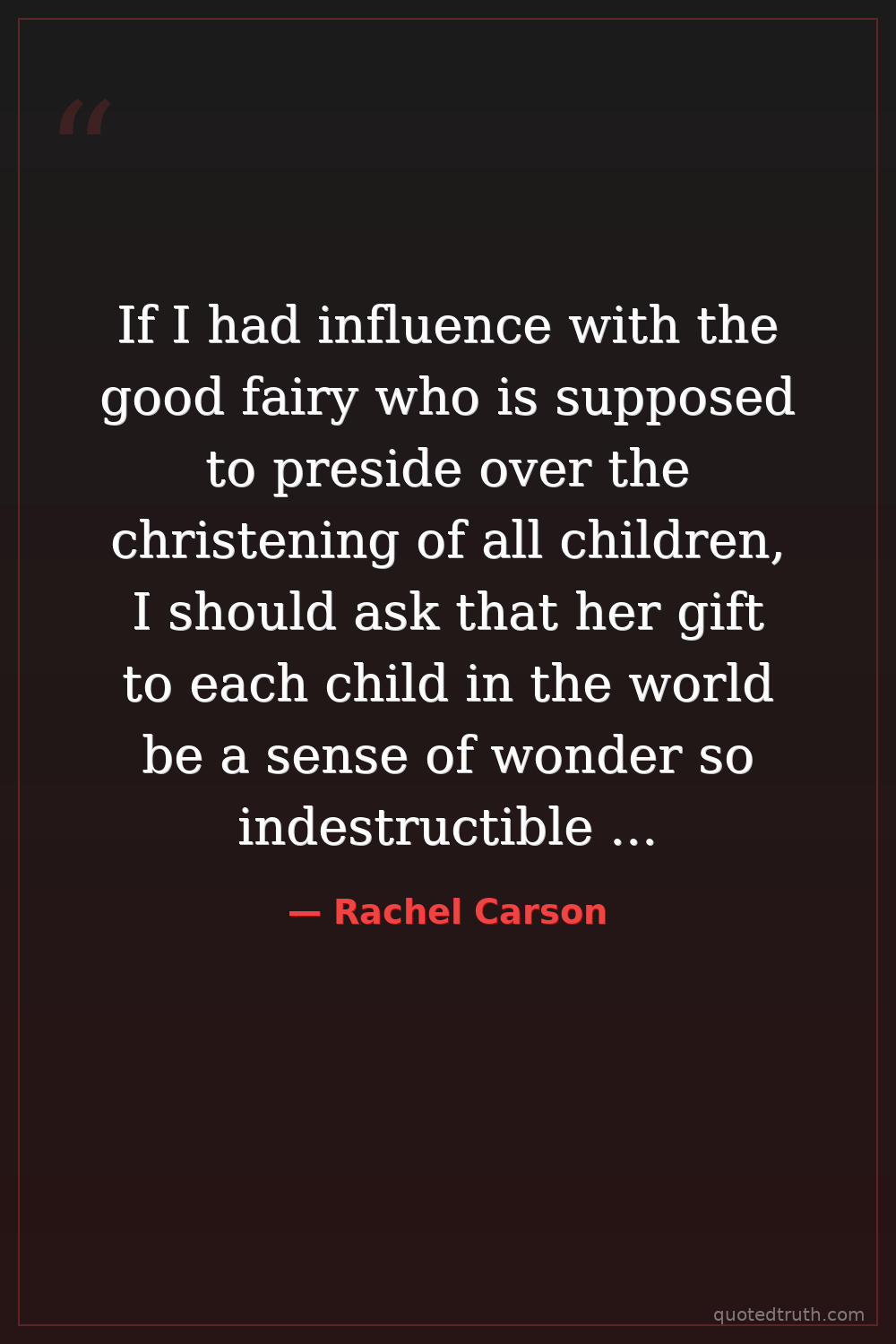
The quote wishes every child could permanently keep the natural awe and curiosity they're born with. Carson believed genuine wonder — the capacity to be moved by nature, to notice the small and remarkable — is not a childish phase but a lifelong necessity. Adults who retain it pay closer attention, ask better questions, and are far less likely to carelessly destroy the living world around them.
Relevance to Rachel Carson
Carson was a marine biologist who never outgrew childhood fascination with tidal pools and birdsong. Her unfinished manuscript, published posthumously as The Sense of Wonder, documented sharing nature with her grandnephew Roger Christie. That book is her clearest personal statement. The precise scientific observation underlying Silent Spring was itself a product of wonder — she cared enough to notice what others dismissed: that spring was going silent.
The era
Carson published Silent Spring in 1962 at the peak of America's postwar chemical optimism. DDT was celebrated as a triumph of science; nature existed to be managed and exploited. Corporate industry promoted pesticides with almost no ecological scrutiny. Carson's emphasis on wonder was a direct counter-argument — a society losing its capacity for awe also loses its ability to notice, and prevent, the catastrophic harm it is causing.
AI-generated insights based on extensive research and information for context. Factual errors? Email [email protected].