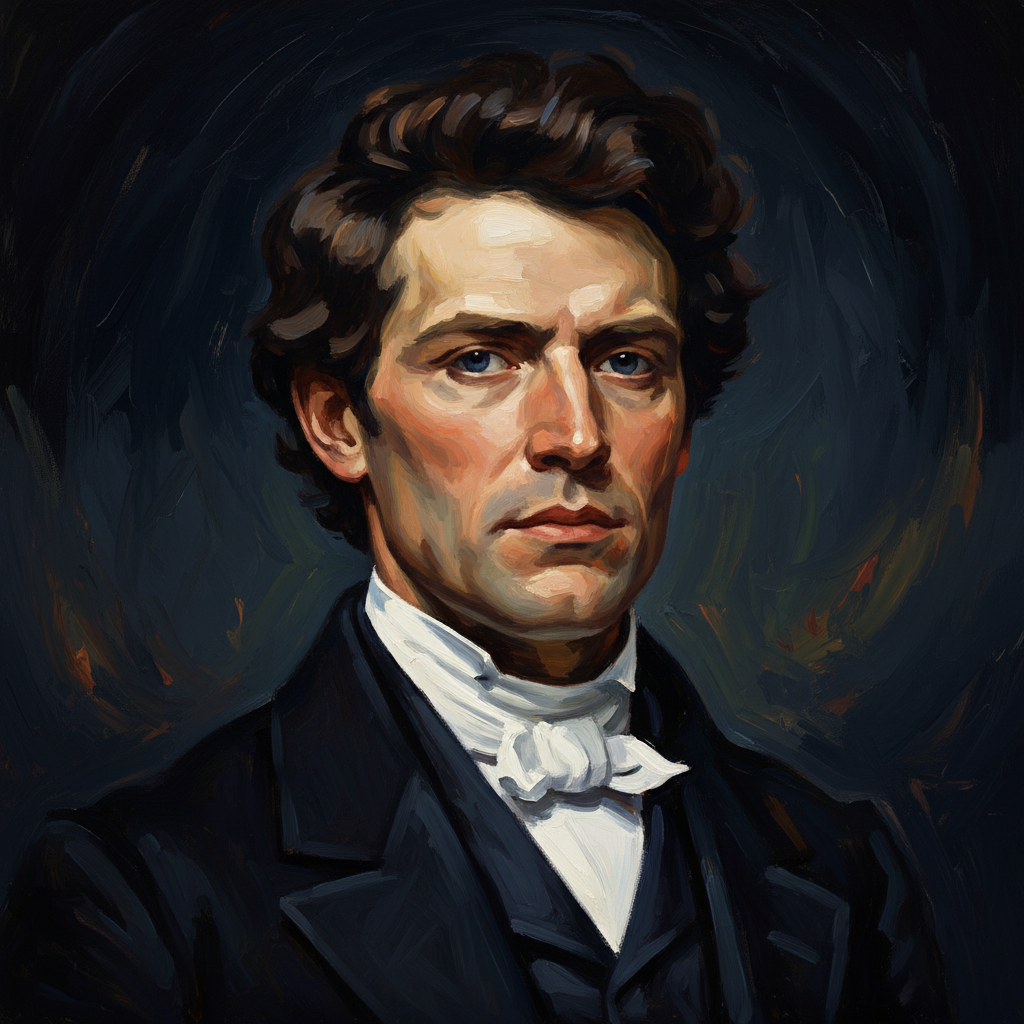
Joseph Smith — "If I were to be saved and go to heaven, and see any man there that I had not end…"
If I were to be saved and go to heaven, and see any man there that I had not endeavored to save, I would feel worse there than I would in hell.
If I were to be saved and go to heaven, and see any man there that I had not endeavored to save, I would feel worse there than I would in hell.
Click any product to generate a realistic preview. Up to 3 at a time.
* Initial load can take up to 90 seconds — revising the preview in another color is nearly instant.
"I am a man of industry, and I will be industrious in all things."
"I had a vision of the Father and the Son, and the Father said, 'This is My Beloved Son. Hear Him!'"
"I am a man of truth, and I will speak the truth at all times."
"I am a man of temperance, and I will be temperate in all things."
"I told the brethren that the Book of Mormon was the most correct of any book on earth, and the keystone of our religion, and a man would get nearer to God by abiding by its precepts, than by any other…"
Found in 1 providers: deepseek
1 source checked
Personal salvation carries a moral obligation toward others. Reaching heaven while knowing you made no effort to help others get there would feel like a deeper failure than damnation itself. It rejects self-focused spirituality in favor of collective responsibility — true fulfillment requires actively working to lift others toward salvation, not merely securing your own. Indifference to others' fate is its own kind of damnation.
Smith founded the Church of Jesus Christ of Latter-day Saints in 1830 and immediately organized missionary efforts across America and Europe. His theology uniquely extended salvation to the dead through proxy baptism, reflecting his belief that no soul should be unreachable. He personally led evangelizing campaigns and sent followers worldwide. This captures his driving conviction that a prophet's responsibility is universal — every soul's fate weighs on those who know the truth.
Smith's words emerged during the Second Great Awakening (1790s–1840s), an era of explosive American religious revivalism. Camp meetings drew thousands, denominations competed for converts, and missionary societies sent evangelists globally. Salvation was debated publicly — who could be saved, how, and by whom. Against this backdrop, Smith's theology was radical: even the dead could be saved through proxy work. The urgency to save every soul wasn't just piety — it was the defining spiritual competition of the age.
AI-generated insights based on extensive research and information for context. Factual errors? Email [email protected].
Your cart is empty