Lord Byron — "If people are to live, why die? And are our carcasses worth raising? I hope, if …"
If people are to live, why die? And are our carcasses worth raising? I hope, if mine is, I shall have a better pair of legs than I have moved on these two-and-twenty years, or I shall be sadly behind in the squeeze into Paradise.
Click any product to generate a realistic preview. Up to 3 at a time. * Initial load can take up to 90 seconds — revising the preview in another color is nearly instant.
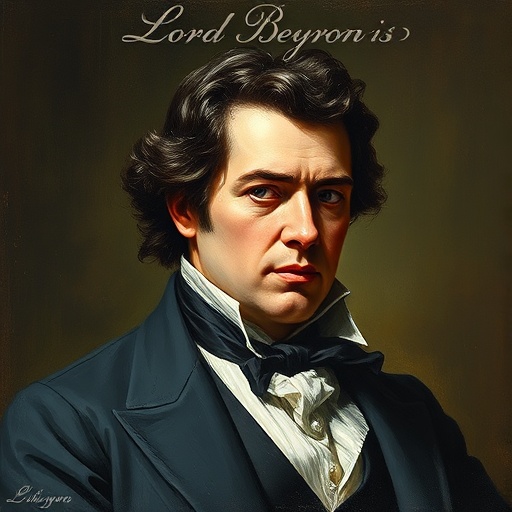
English Romantic poet whose Childe Harold's Pilgrimage (1812-18) and Don Juan (1819-24) made him a continent-wide celebrity; died at Missolonghi fighting for Greek independence.
Closely associated with
Percy Bysshe Shelley (Geneva summer companion and fellow second-generation Romantic) and John Keats (younger Romantic Byron mocked but later admired).
For an intellectual contrast, see
William Wordsworth, Lake Poet of pious nature-worship — Byron's mockery of 'the Lakers' Wordsworth, Coleridge, and Southey runs through Don Juan as a sustained literary feud across hundreds of stanzas. The cleanest Romantic-internal split between sincere-pastoral and cynical-worldly poetics.