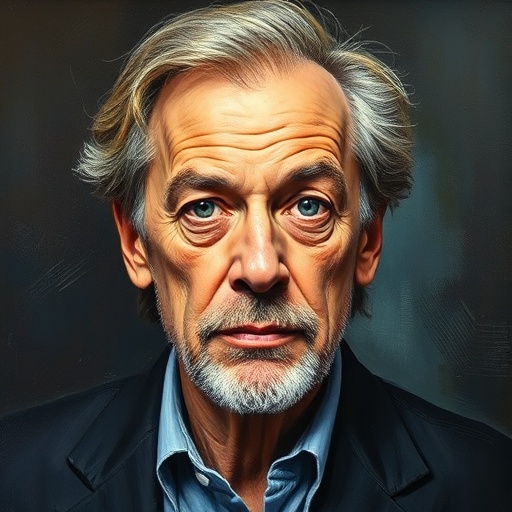
Richard Feynman — "I'm not a serious fellow."
I'm not a serious fellow.
I'm not a serious fellow.
Click any product to generate a realistic preview. Up to 3 at a time.
* Initial load can take up to 90 seconds — revising the preview in another color is nearly instant.
"It's a great thing to be able to say, 'I don't know.'"
"I don't see anything wrong with being confused."
"It's not enough to be a good scientist. You have to be a good person too."
"I have often thought that if there is any hell, it must be the place where there are no questions, only answers."
"I'm not a deep thinker. I'm a practical thinker."
American theoretical physicist who shared the 1965 Nobel for QED, developed Feynman diagrams, and wrote the Feynman Lectures on Physics. Closely associated with Julian Schwinger (co-Nobelist for QED) and Murray Gell-Mann (Caltech rival and Eightfold-Way physicist). For an intellectual contrast, see Deepak Chopra, physician and quantum-mysticism author — Feynman's Caltech 'cargo cult science' commencement address is the precise template for what he saw as misuse of physics terminology — Chopra-style appropriation of quantum vocabulary for metaphysical claims is the canonical example of what Feynman called 'fooling yourself'.
Found in 1 providers: grok
1 source checked
Feynman is deflecting the expectation that great scientists must be solemn, rigid, or humorless. He's claiming he approaches life and work with playfulness rather than pompous gravity. The statement is itself a paradox: a Nobel laureate dismissing the weight of his own stature, suggesting seriousness isn't required for profound discovery — curiosity and delight matter more than performing intellectual gravitas.
Feynman was legendarily irreverent: he played bongo drums in strip clubs, cracked safes at Los Alamos for fun, and gave lectures that felt like stand-up comedy. He distrusted authority and academic pretension. His path-integral formulation and Feynman diagrams emerged from a mind that treated physics as a game. The quote perfectly captures his lifelong resistance to the stuffed-shirt culture of elite science.
Post-WWII American science was elevated to near-religious prestige after the Manhattan Project and Cold War research funding. Scientists were expected to be sober, serious guardians of civilization. Feynman came up in this era but openly mocked its self-importance — at a time when the cultural script demanded gravity from Nobel laureates, his performative lightness was a genuine counter-cultural statement within academia.
AI-generated insights based on extensive research and information for context. Factual errors? Email [email protected].
Your cart is empty