What it means
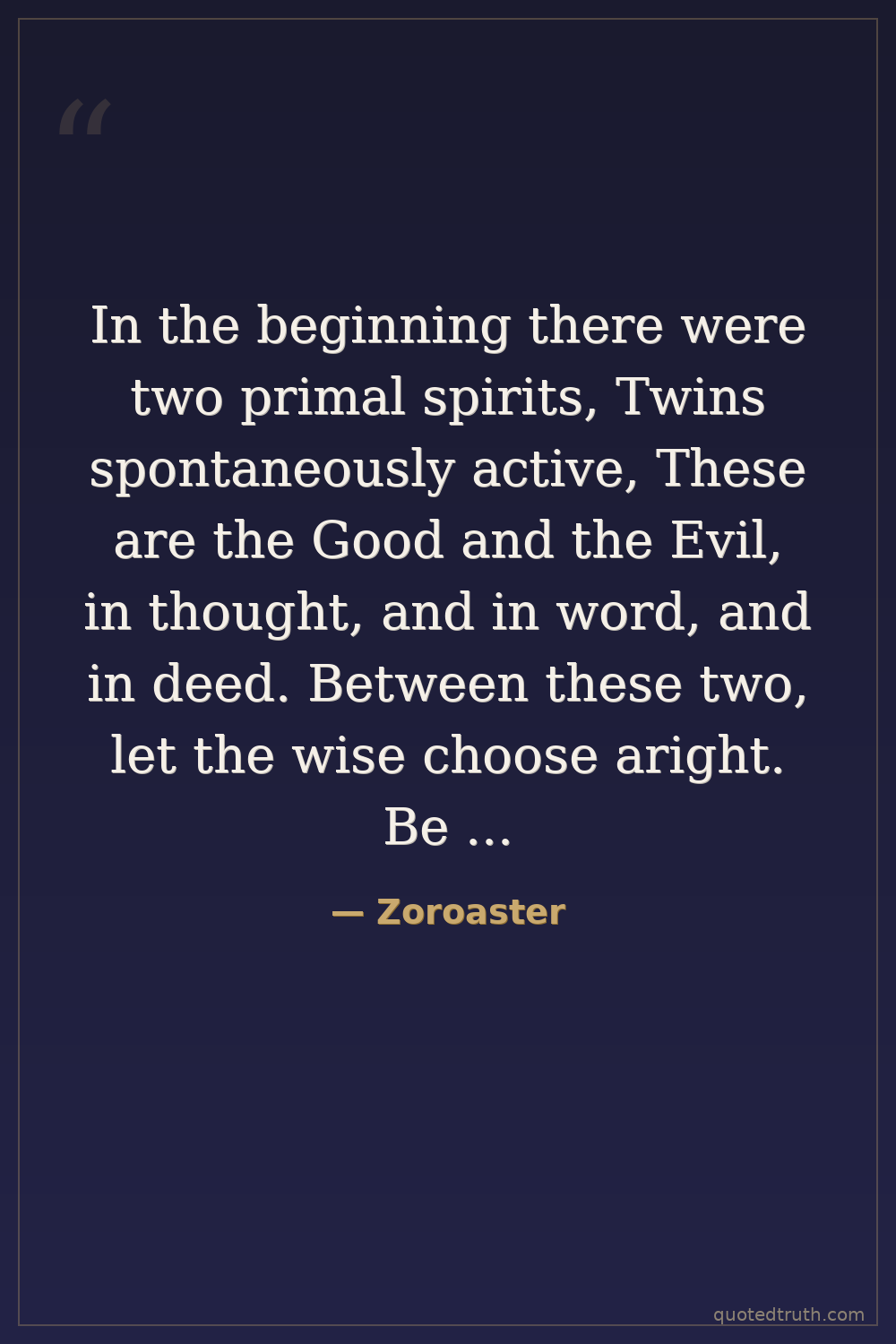
Reality begins with two original forces that arose together and act on their own: one good, one evil. Their opposition plays out in how people think, what they say, and what they do. Every person faces a real choice between them in daily life, and wisdom means deliberately picking the good side. Morality is not passive or inherited; it is an active, ongoing decision, and you are responsible for choosing rightly rather than drifting into harm.
Relevance to Zoroaster
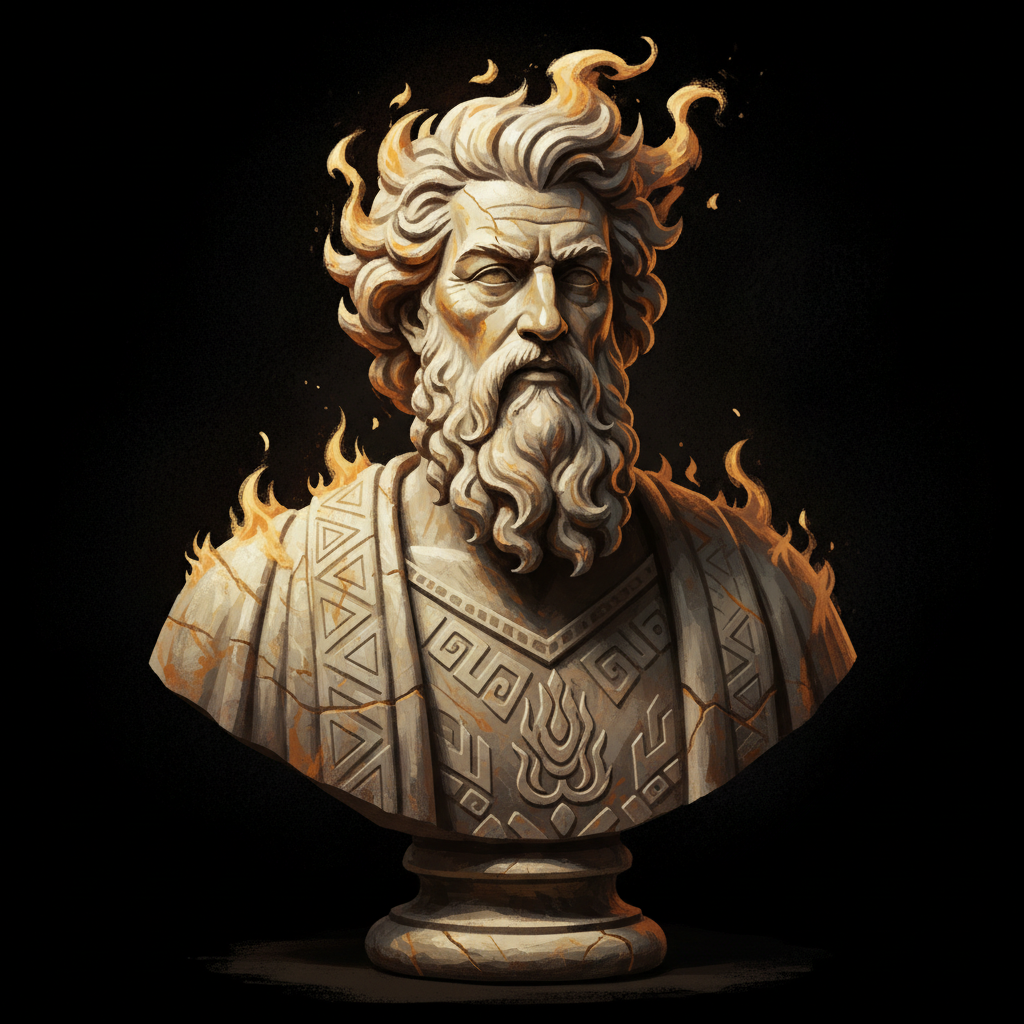
Zoroaster built his entire religion around this dualism, teaching that Ahura Mazda, the wise lord of light, stands opposed to Angra Mainyu, the destructive spirit. As a priest-turned-reformer, he rejected the ritualistic polytheism of his tribe and insisted salvation came through the personal triad of good thoughts, good words, and good deeds, the exact three arenas this saying names. His life's work was urging people to consciously align with truth (asha) over the lie (druj).
The era
Zoroaster lived in Bronze Age Iran, roughly between 1500 and 1000 BCE, among pastoral Indo-Iranian tribes practicing polytheistic animal sacrifice and a priest-dominated ritual system. Cattle raids, warrior cults, and intoxicant-fueled ceremonies shaped daily religion. Into this world he introduced an unprecedented ethical monotheism centered on personal moral choice, influencing later Judaism, Christianity, Islam, and Greek philosophy. His teachings would eventually become the state religion of the Persian Empire under the Achaemenids and Sasanians.
AI-generated insights based on extensive research and information for context. Factual errors? Email [email protected].