What it means
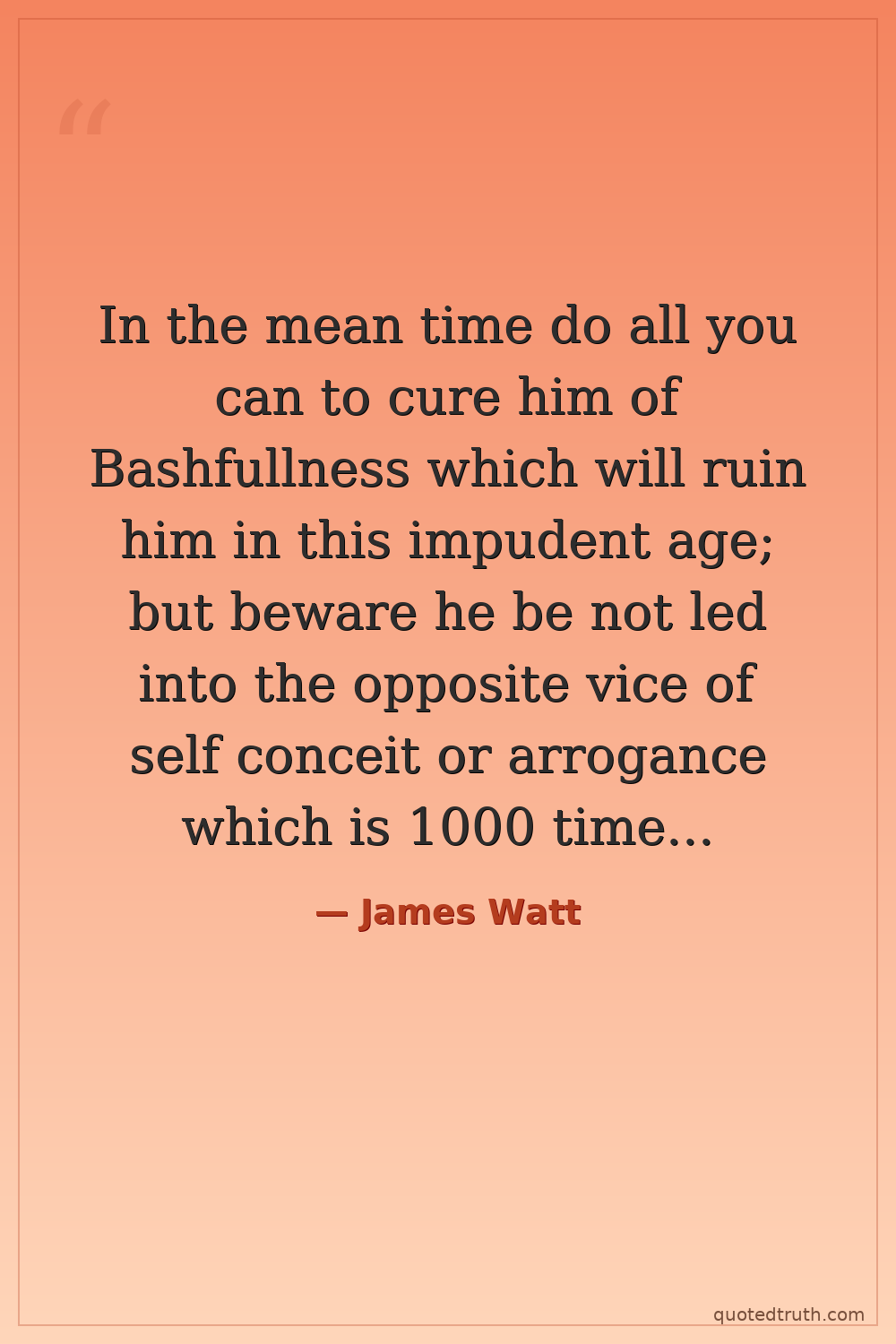
This quote advises striking a precise balance between two opposite character flaws. Shyness will cripple someone in a bold, aggressive world — they'll be overlooked or exploited. But arrogance is far worse: it blinds a person to their limits, alienates allies, and corrupts judgment. True effectiveness requires confident humility — assertive enough to compete, self-aware enough never to become insufferable. The warning is proportional: bashfulness wounds, arrogance destroys.
Relevance to James Watt
Watt was famously introverted and self-doubting — he needed Matthew Boulton's commercial boldness to bring his steam engine to market. Yet he despised pretension. His letters reveal a man navigating crippling self-criticism alongside ruthless patent disputes and competitor sabotage. This advice mirrors his own hard-won lesson: bashfulness cost him years of delay, but he also watched arrogant rivals destroy themselves through overreach and poor judgment.
The era
Watt wrote during the Industrial Revolution's fiercest decades — the 1770s–1790s — when bold self-promotion defined success. Entrepreneurs, merchants, and inventors competed aggressively in Britain's expanding markets. Yet Enlightenment culture simultaneously prized rational modesty and moral virtue over vain boasting. An 'impudent age' rewarded audacity, but educated circles measured character by restraint and substance. Navigating this tension was the defining social challenge for ambitious men of the era.
AI-generated insights based on extensive research and information for context. Factual errors? Email [email protected].