Galileo Galilei — "It is a great error to believe that the truths of faith are in any way contrary …"
It is a great error to believe that the truths of faith are in any way contrary to the truths of reason.
It is a great error to believe that the truths of faith are in any way contrary to the truths of reason.
Click any product to generate a realistic preview. Up to 3 at a time.
* Initial load can take up to 90 seconds — revising the preview in another color is nearly instant.
"The two books from which I draw my knowledge are the book of the created world and the book of the Holy Scripture."
"I hold it to be an error to believe that the truths of faith and the truths of science are contradictory."
"The senses, assisted by reason, are the source of all our knowledge."
"The universe is an immense, an incomparable, and an inexhaustible library."
"I hold the sun to be situated motionless in the center of the revolution of the celestial orbs while the earth revolves around the sun."
Found in 1 providers: grok
1 source checked
Faith and reason are not enemies. Religious truth and logical, evidence-based inquiry point toward the same reality rather than contradicting each other. A person can hold sincere belief while also following wherever evidence and rigorous thinking lead, because genuine truth — whether revealed through scripture or discovered through investigation — cannot ultimately contradict itself.
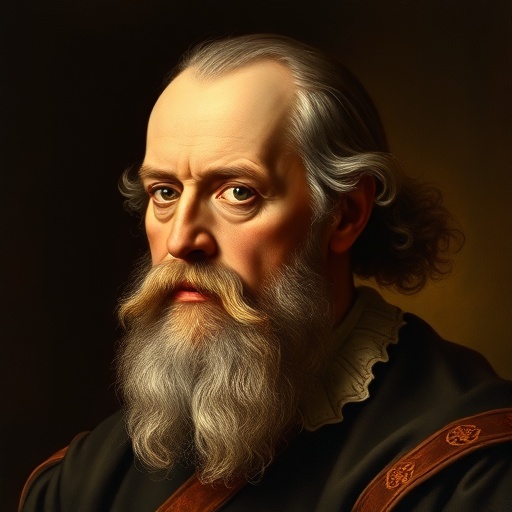
Galileo lived this tension directly. His heliocentric advocacy brought him before the Inquisition in 1633, forcing him to recant. Yet he remained devout throughout. He genuinely believed his telescopic observations glorified God's creation rather than undermining Church authority, framing science as reading the 'book of nature' written in mathematics alongside scripture.
The early modern period saw the Catholic Church wielding enormous intellectual authority while natural philosophers increasingly challenged Aristotelian cosmology. The Reformation had already fractured Christian unity, making orthodoxy politically explosive. Galileo wrote during the Counter-Reformation, when any perceived conflict between emerging empirical science and scripture carried life-altering consequences, making his reconciliation argument both courageous and strategically necessary.
AI-generated insights based on extensive research and information for context. Factual errors? Email [email protected].
Your cart is empty