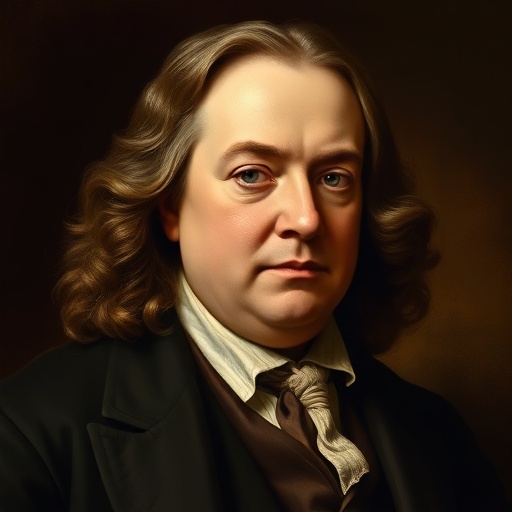
Jonathan Swift — "It is a maxim that a man who has made his fortune, may do what he pleases."
It is a maxim that a man who has made his fortune, may do what he pleases.
It is a maxim that a man who has made his fortune, may do what he pleases.
Click any product to generate a realistic preview. Up to 3 at a time.
* Initial load can take up to 90 seconds — revising the preview in another color is nearly instant.
"I have ever hated all nations, professions, and communities, and all my love is toward individuals: for instance, I hate the tribe of lawyers, but I love Counsellor Such-a-one, and Judge Such-a-one: s…"
"There are few, very few, that will own themselves in a mistake, though all the World sees them to be in downright nonsense."
"As for yourself, whom I have the honour to know, you are a person of distinction, and would have been an ornament to any court in Europe."
"I could name a country which would be glad to eat up our whole nation without salt."
"The greatest ornament of an eminent character is humility."
Anglo-Irish satirist and Dean of Dublin's St Patrick's Cathedral whose Gulliver's Travels (1726) and A Modest Proposal (1729) are the canonical English-language satires. Closely associated with Alexander Pope (Scriblerus Club poet and collaborator) and John Gay (Beggar's Opera author and satirical contemporary). For an intellectual contrast, see Daniel Defoe, English Whig journalist and Robinson Crusoe author (1660-1731) — Defoe's Crusoe (1719) celebrates Enlightenment self-reliance and the colonial-mercantile project; Swift's Gulliver (1726) systematically dismantles every form of human pretension Defoe celebrated. The cleanest Augustan Whig-vs-Tory literary pairing — optimistic-empirical vs misanthropic-satirical.
Your cart is empty