What it means
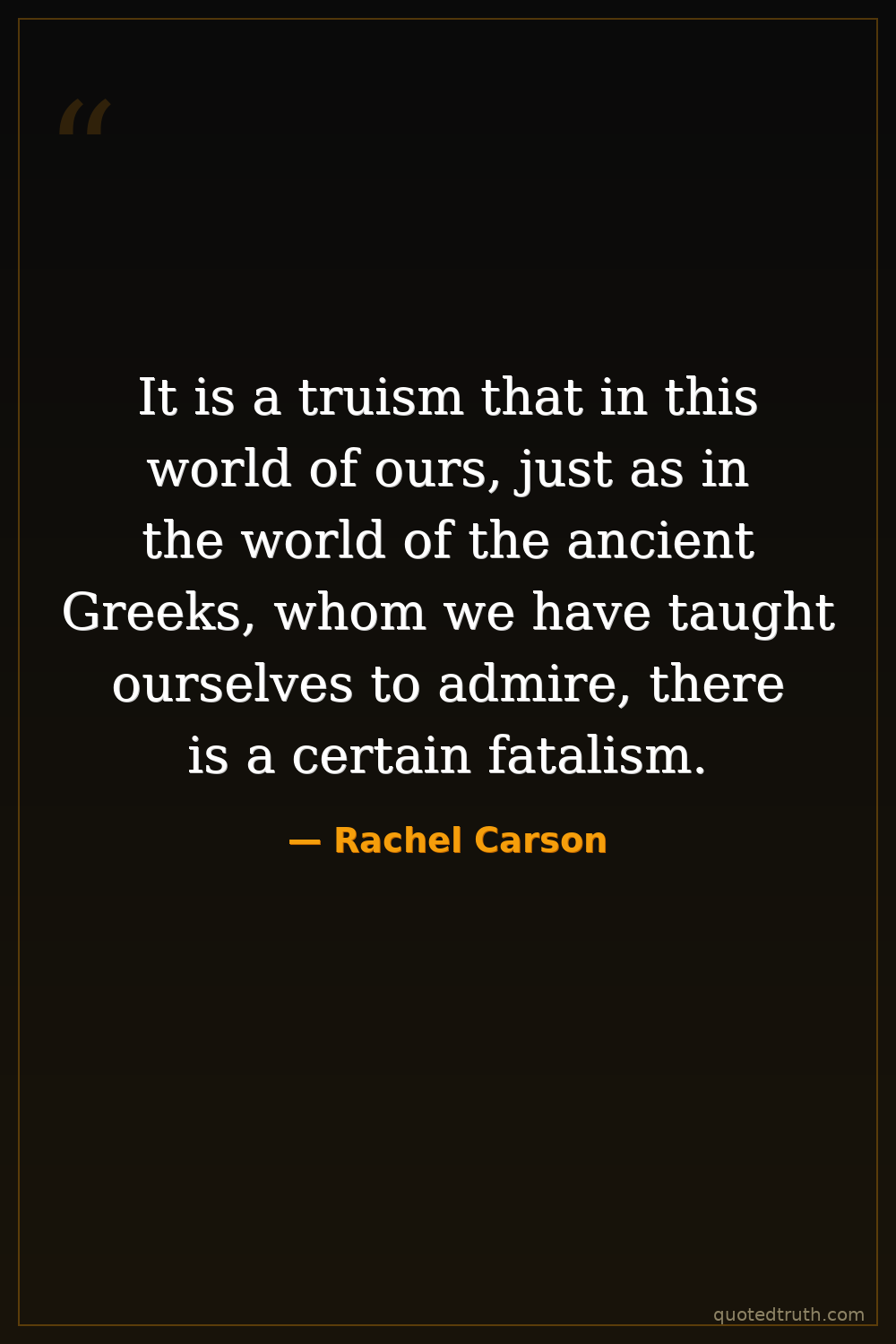
Carson states as an obvious truth that fatalism — the belief that outcomes are fixed and inevitable — shapes modern life just as it governed ancient Greek culture. The Greeks accepted fate through myth and tragedy; modern people similarly treat technological damage or industrial progress as unstoppable forces. She names this resignation not to endorse it, but to expose it as a shared human pattern worth examining and, implicitly, resisting.
Relevance to Rachel Carson
Carson spent her career dismantling fatalism. Silent Spring directly challenged the industry-promoted belief that pesticide use was inevitable and harmless — a modern version of fate. As a marine biologist she understood ecosystems as dynamic, not fixed. Her willingness to confront chemical corporations and the USDA showed personal rejection of fatalism. This quote reveals her intellectual habit of historicizing human attitudes to expose them as choices rather than destiny.
The era
Carson wrote during the post-WWII chemical boom and Cold War, when two fatalistic currents dominated: nuclear annihilation felt inevitable, and synthetic pesticides like DDT were framed as unstoppable modernization. Corporations and government agencies cast environmental damage as the natural price of progress. Her Greek reference lands because classical education was revered in mid-century America, yet the Greeks also modeled resigned acceptance of fate — the exact attitude Carson was urging readers to abandon.
AI-generated insights based on extensive research and information for context. Factual errors? Email [email protected].